

Software for UK tree surgeons
LOLER inspection due Friday. NPTC CS31 lapsed without me noticing. The £6m PL covered the chunk off the sycamore - the customer’s wife is still on Facebook about it.
Tree surgery is a different trade from gardening. The ticket is £800-£3,000+ per job for domestic dismantles, well into five figures for big estate or commercial work, and the kit (climber + groundie + chipper + MEWP) is closer to small-construction than landscaping. The compliance is the heaviest in the trades cluster - NPTC chainsaw certs (CS30 maintenance, CS31 felling, CS32 windblown, CS38 climbing, CS39 aerial cutting), LOLER 6-monthly inspections on every climbing harness and rope, MEWP / IPAF / PASMA on access kit, BS 3998 method statements on every job, LANTRA awards alongside NPTC where the operative is certified that route, and Arboricultural Association approved-contractor evidence where you carry it. Storm season is feast - Storm Babet meant three weeks of fence-down and tree-down chaos and a £100,000 month - but it’s also when you take the cheap jobs because you’re scared the calls will stop, and lose the proper customers because you can’t get back to them. £6m public liability is the minimum that lets you sleep; the chunk off the sycamore over the Range Rover was covered, the customer’s wife is still on Facebook about it. TPO (Tree Preservation Order) consultations and Conservation Area notifications run as their own parallel paperwork - six weeks’ notice to the local planning authority before any work, and the council’s response (or non-response) determines whether you’re cutting or holding.
This page is for firms whose week is mostly tree work. If tree work is one part of a mixed landscaper week, the main landscapers page is the better fit. Tree surgery is its own business because the compliance burden, the storm-season cycle, the TPO consultation cadence, and the insurance-work pipeline all run on different clocks from a gardening round.
What your week actually looks like
- A LOLER 6-monthly inspection on every harness and rope set in the firm - three climbers, four harnesses, eight ropes - and the inspector who wants the firm on his round.
- NPTC CS30 / CS31 / CS32 / CS38 / CS39 renewals across the operatives, plus MEWP / IPAF / PASMA on the access kit, plus the A-licence chainsaw where you’re doing council work, plus the LANTRA awards alongside, plus your own chainsaw service intervals.
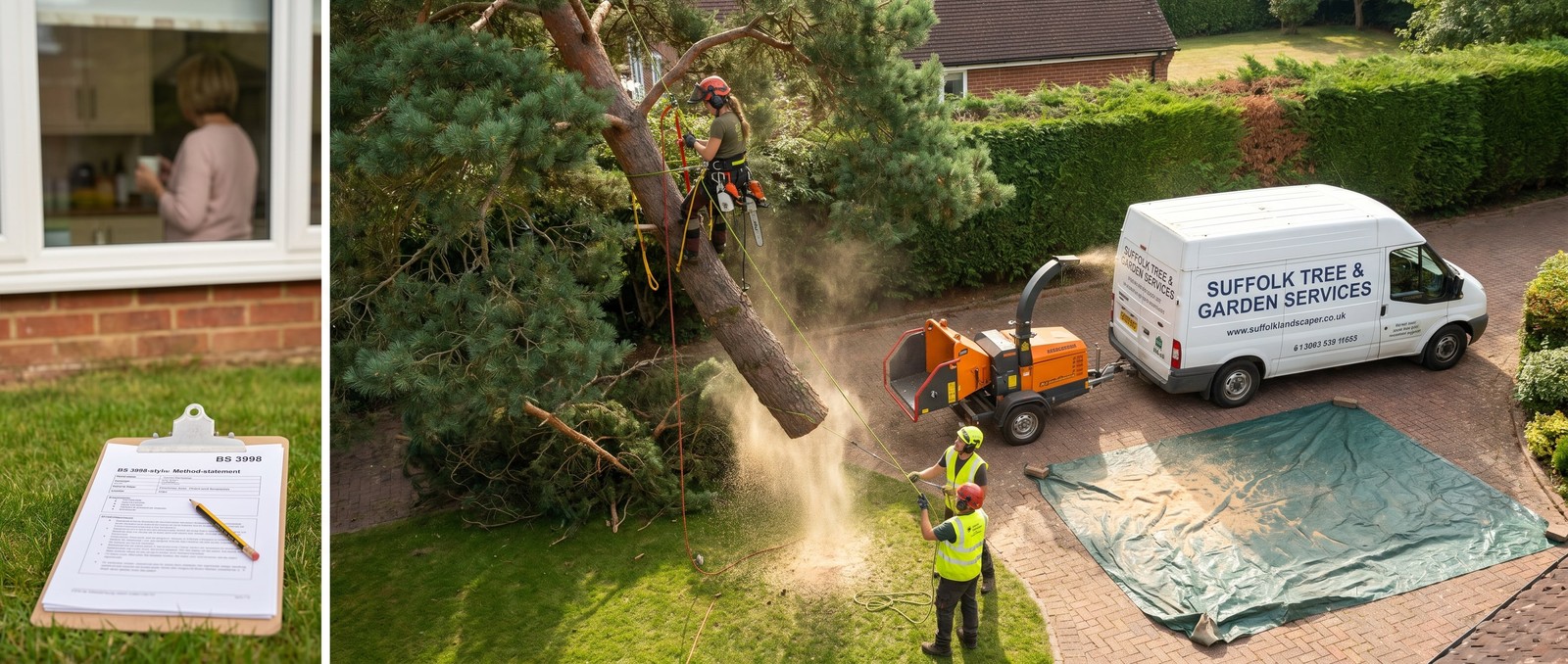
- A £1,400 day on a leaning Scots pine over a customer’s garage - the climber’s strops, the rigging plan, the BS 3998 method statement, the photo-evidence the customer’s insurance will want six months later.
- A Stihl saw stalls mid-cut on a sycamore branch over a Range Rover - comes down across the fence instead of the lawn; six inches the other way and that’s news; the £6m PL handles it but the customer’s wife is on Facebook by Saturday.
- Storm Babet - three weeks of fence-down, tree-down, dangerous-tree calls melting the phone; you take cheap jobs because you’re scared the calls stop, lose the proper customers because you can’t get back to them.
- Insurance-pipeline tree work - loss-adjuster commissioning, 30-60-90 day waits on insurer payment, different report template per insurer, photo evidence of the failure mode the engineer wants.
- A Husqvarna chipper packs up Tuesday morning on a £1,400 day; sub-hire chipper is £180 for the day, margin gone, customer rescheduled for next week.
- A council contract for parish boundary-tree work - CHAS / SafeContractor / Constructionline accreditation needed before they’ll add you to the panel; Arboricultural Association approved-contractor membership the second gate.
- A TPO consultation on a mature oak in a conservation area - six-week notice period to the local planning authority, the customer wants it gone yesterday, the council’s response window doesn’t care.
- A 5-day MEWP IPAF re-test diary block coming up in August - the kit’s working, the operator’s cert isn’t.
- A “can I just have an estimate over the phone?” call from a homeowner who’s reading on Facebook that tree work is £80/hour and yours is £400/day for a reason.
This isn’t a job-management software problem. It’s a compliance-burden-meets-storm-cycle-meets-insurance-pipeline problem with £6m PL exposure and a TPO consultation calendar running alongside.
Example problems we could solve
1. The Tree Surgery Compliance Pack - NPTC + LOLER + MEWP + LANTRA register
The “in my head as next month” moment: “Climbing harness LOLER inspection due Friday. I had it in my head as next month. HSE turn up on a domestic - I’m finished.”
Solved looks like: the operative-and-kit compliance register as the foundation of the build. Per operative: NPTC certs (CS30, CS31, CS32, CS38, CS39, CS41 windblown if applicable, A-licence chainsaw for council work) with expiry dates and the LANTRA awards alongside; MEWP / IPAF / PASMA / first-aid-at-work / forestry first-aid+F certs with expiry dates; toolbox-talk attendance log. Per kit-item: harness, ropes, lanyards, fall-arrest, chipper, MEWP, climbing helmet with the 6-monthly LOLER inspection date + the inspector + the certificate PDF; chainsaw service-interval log per machine. 90 / 30 / 7-day expiry reminders fire to you with one-tap re-book to the usual training centre (Tomkat, Logic4Training, Able Skills, NPTC direct) or the LOLER inspector. CHAS / SafeContractor / Constructionline annual evidence pack assembles from the same store; Arboricultural Association approved-contractor renewal evidence assembles alongside; council-panel applications submit with the pack one click. ISO 9001 / 14001 / 45001 layer alongside for the firms carrying them. The tree-surgery-specific moment: the compliance burden is heavier than any other landscaper sub-trade - the build is shaped around making next-due visible 90 days out, not 7 days too late. The longer version lives at /solutions/compliance-evidence-record.
2. The on-site method statement + photo-evidence pack
The “six months later” moment: “Customer’s insurance came back six months later asking for the rigging plan, the BS 3998 method statement, the climber qualifications. I had it all in the van at the time.”
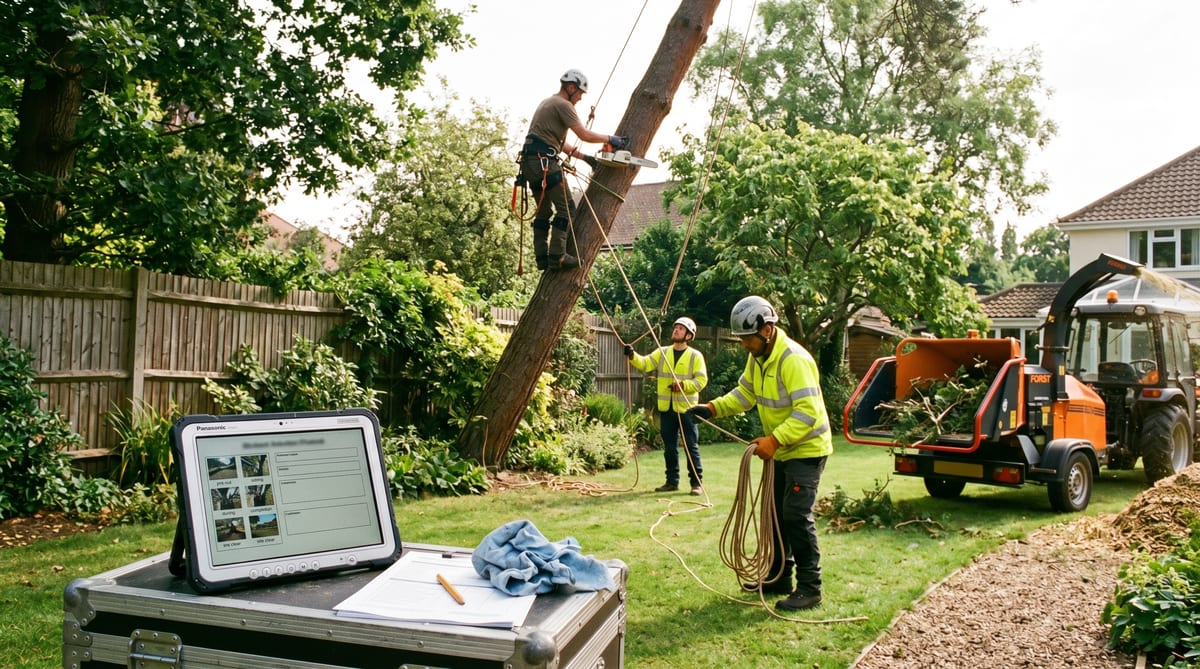
Solved looks like: every job has a structured method-statement workflow on the tablet at the door. Pre-job assessment captures the tree species + DBH + height estimate + condition + species-specific quirks (sycamore tar spot, leaning-stem analysis, dead-wood retention for ecology, RHS-aligned tree-form notes where relevant); the BS 3998 method statement generates from the assessment with the rigging plan (lower / drop / fell / dismantle), the climber + groundie names with cert references, the customer-side hazard zone, the PPE checklist, the emergency-rescue plan. Photo evidence per stage - “pre-cut”, “during”, “completion”, “site clear” - auto-attaches to the job record. The handover pack to the customer (and to her insurance company if needed six months later) assembles on demand as a single PDF. The tree-surgery-specific moment: a tree job that goes wrong is an insurance-and-Facebook story, and the structured evidence is what stops a “the saw stalled, the tree went the wrong way” incident from becoming a year-long argument.
3. Storm-mode capacity manager - triage the three-week melt
The “feast-then-bad-reputation” moment: “Storm Babet, three weeks. Phone melts. I take the cheap fence-down jobs because I’m scared the calls will stop, lose the proper customers because I can’t ring them back. Three weeks of feast, six months of bad reputation.”
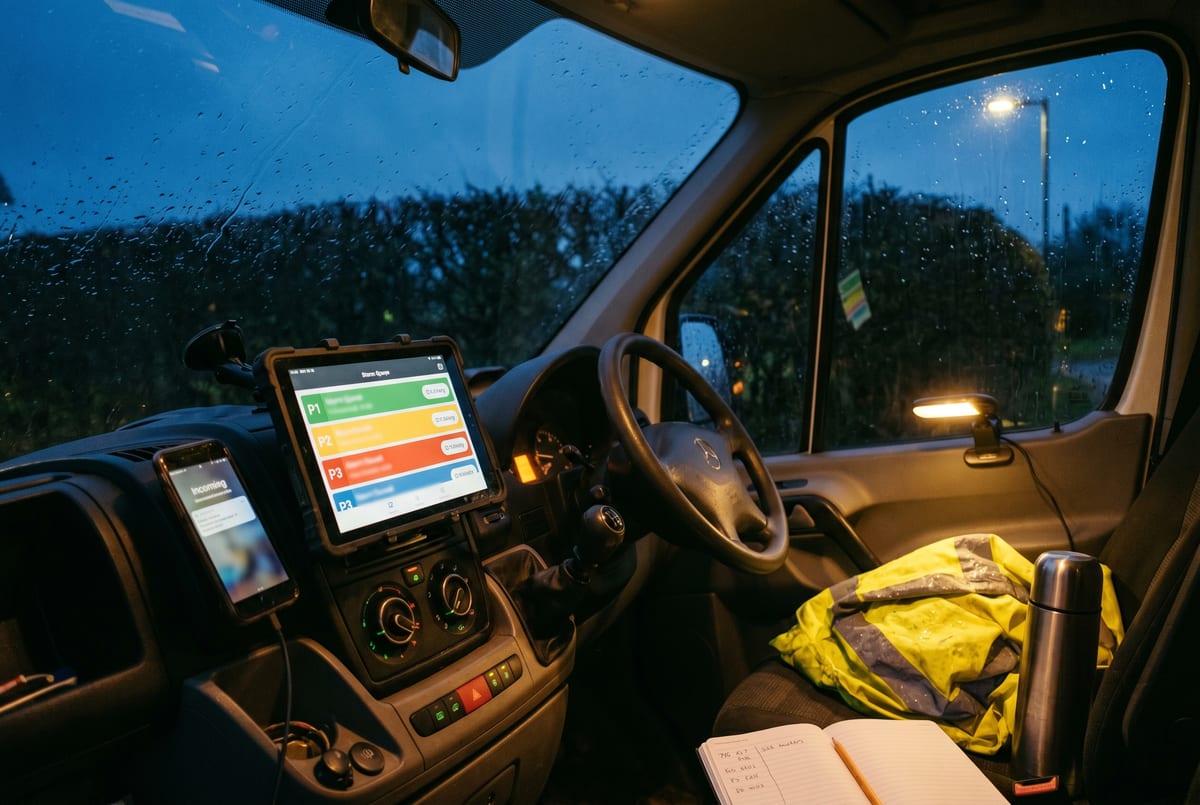
Solved looks like: a storm-mode flag flips when emergency-call volume crosses a threshold. Inbound to the AI agent re-triages with storm priorities - “is anyone at risk? is anyone’s car at risk? is anyone’s property cordoned?” - P1 dangerous-tree / property-at-risk callbacks escalate to you with one tap; P2 fence-down / non-urgent work books into the post-storm slot with a customer-side SMS managing expectations (“Hi Sarah, storm week - I can fit you in next Tuesday or Wednesday week 2; happy to confirm a slot now if you want certainty”); P3 routine maintenance auto-defers to the following month with a polite “we’ll be back in touch in a fortnight”. The operator dashboard shows the storm queue by priority + by location + by estimated revenue, so the £1,400 day on the leaning sycamore lands in your diary ahead of the £180 fence-panel. Multi-van firms see the queue by van + by priority + by location, so the dispatch in storm-mode considers which crew is closest to the next P1 callback. The tree-surgery-specific moment: storm-week is the difference between a great year and a great-then-quiet year - the build is shaped around routing the volume in the order that holds the long-term customer base. The longer version lives at /solutions/trainable-inbound-ai-agent; the storm-mode triage is the tree-surgery-shaped version of the inbound agent.
4. Insurance-pipeline tree work - the loss-adjuster track alongside the customer track
The “30-60-90 day” moment: “Customer’s tree fell on her conservatory. Loss adjuster commissions me to dismantle and remove. The customer wants it gone yesterday. The insurer pays in 60-90 days on a template that’s different to the last insurer I worked for.”
Solved looks like: the insurance pipeline as a structured object alongside the domestic / commercial pipeline. Per insurer (Aviva, Direct Line, Allianz, AXA, RSA + the loss-adjuster commissioning bodies - Sedgwick, Crawford, Davies, Cunningham Lindsey now part of Sedgwick) the report template + the submission portal + the payment terms live in the system. On-site capture: pre-removal photos + during + completion + waste-removal weighbridge ticket + arboricultural assessment for any retained or replanted tree. Report renders to the insurer’s preferred template within their stated window; submission tracks against the chase clock with day-14 / day-30 / day-60 ladder citing the Late Payment of Commercial Debts (Interest) Act 1998 where it’s earned. Customer-side, the homeowner gets a softer cadence - “removal complete, claim ref X12345 with the loss adjuster, you’ll hear from us when the insurer’s released payment” - so she’s not ringing you for the insurer’s decision. The tree-surgery-specific moment: insurance work is the highest-ticket per job (£3k-£15k for storm-emergency claims) but the slowest-paid, and the build is shaped around running the insurer ladder in parallel with the customer cadence rather than letting the homeowner panic about the wait. The longer version lives at /solutions/invoice-and-dunning-ladder.
5. The TPO consultation tracker - six weeks’ notice, the council’s clock, your diary
The “council didn’t reply” moment: “Mature oak in a conservation area. Customer wants it crown-reduced this month. TPO consultation goes in to the local planning authority - six-week notice period, the council can object, can vary, or can stay silent. They went silent on the last one and I held off for an extra two weeks because I wasn’t sure whether ‘no reply’ meant ‘go ahead’ or ‘we lost it’.”
Solved looks like: every TPO / Conservation Area / SSSI / felling-licence consultation enters the system as a tracked object. Submission to the local planning authority (most LPAs publish a portal or accept structured email); date of submission, six-week clock starts, named officer at the LPA on file. Day-28 reminder to you with the LPA’s current status if known; day-42 the consultation window closes and the engine surfaces the outcome - objection received, variation issued, or silence (which under the regulations means the work can proceed). Customer-side, the homeowner gets a soft cadence - “TPO consultation submitted on [date]; planning authority response due by [date]; I’ll be back in touch then to confirm we can proceed” - so the “is he forgetting about me?” call doesn’t come. Where the work touches a felling licence (Forestry Commission, on volumes above the exemption threshold), the same track handles that submission alongside. The tree-surgery-specific moment: TPO consultations cluster around mature-tree work in conservation-area postcodes, the six-week clock is statutory, and the build is shaped around making the council’s response window visible on your diary rather than living in a paper folder in the cab.
Closest builds we’ve shipped
- MMI serviceslegacy insurance-claims surface (being modernised). Closest shape-match for the loss-adjuster pipeline in problem 4: claim references, loss-adjuster relationships, deferred payment cycles, audit-pack assembly. Own-brand case study, ships full-fat - see /case-studies/mmi-services.
- HC Electricaldifferent trade, same Suffolk trade-chassis with the compliance + scheme-registration cadence on the EICR / NICEIC side. The reference for how the same per-operative compliance register pattern runs in a Suffolk trade business - the cert + expiry + renewal-evidence discipline ports straight across to the NPTC / LOLER / MEWP register. (Pull-quote held behind the permission checklist; see /case-studies/hc-electrical.)
- mendbuddyour own multi-channel AI agent platform behind the storm-mode triage in problem 3 and the inbound qualification on tree-emergency vs domestic-quote calls. Trained on your scope questions, your storm-mode priorities, and your customer voice. See /case-studies/mendbuddy.
FAQ
Will the LOLER reminder book the inspector for me?
No. The inspector is your relationship - we build the 90 / 30 / 7-day reminder with the inspector’s contact preferences pre-loaded; the booking conversation stays with you.
Can the engine handle Arboricultural Association approved-contractor evidence?
Yes. Arboricultural Association approved-contractor renewal evidence + CHAS + SafeContractor + Constructionline + ISO 9001 / 14001 / 45001 (where you carry it) all assemble from the same per-operative + per-kit compliance store from problem 1.
Will you submit the TPO consultation on my behalf?
No. The consultation is yours to submit (and your professional reputation rides on the accuracy of the work-specification you put in). We build the structured object, the six-week clock, the day-28 / day-42 reminders, the LPA-response tracking, and the customer-side cadence. The submission goes through the local planning authority’s portal or structured email - that submission is yours.
Will you submit the insurance claim on my behalf?
No. The submission goes through the loss adjuster’s portal or the insurer’s claims handler - that submission is yours. We build the report to the insurer’s preferred template, queue the submission with the photo evidence attached, and run the chase ladder from there.
Can the storm-mode capacity dashboard handle multi-van firms?
Yes. The dispatch dashboard shows the queue by van + by priority + by location, so the call routing in storm-mode considers which crew is closest to the next P1 callback.
What about the A-licence chainsaw / LANTRA awards alongside NPTC?
Both track in the same operative register. A-licence (for council and Forestry-Commission roadside work) and the LANTRA awards (where the operative came through that certification route rather than NPTC) sit alongside the NPTC CS-suite with their own expiry dates and renewal reminders.
What does it cost?
Every build is scoped per firm - depends on operative count, kit register depth, whether the insurance pipeline + Arboricultural Association evidence + TPO consultation tracking is in scope. We talk it through, agree price in writing. See pricing.
Up to the hub
← UK landscapers (main page) · Commercial grounds maintenance (sibling) → · Roofers (adjacent trade) → · Storm-damage roofer (adjacent spoke) →
Tell us about the tree side
What’s your operative count, what NPTC scope you carry, what insurance-pipeline mix vs domestic mix, what Arboricultural Association status you hold, where the storm-week melt is breaking, what TPO consultation volume you carry. Send an enquiry - we’ll sketch what we’d build.