

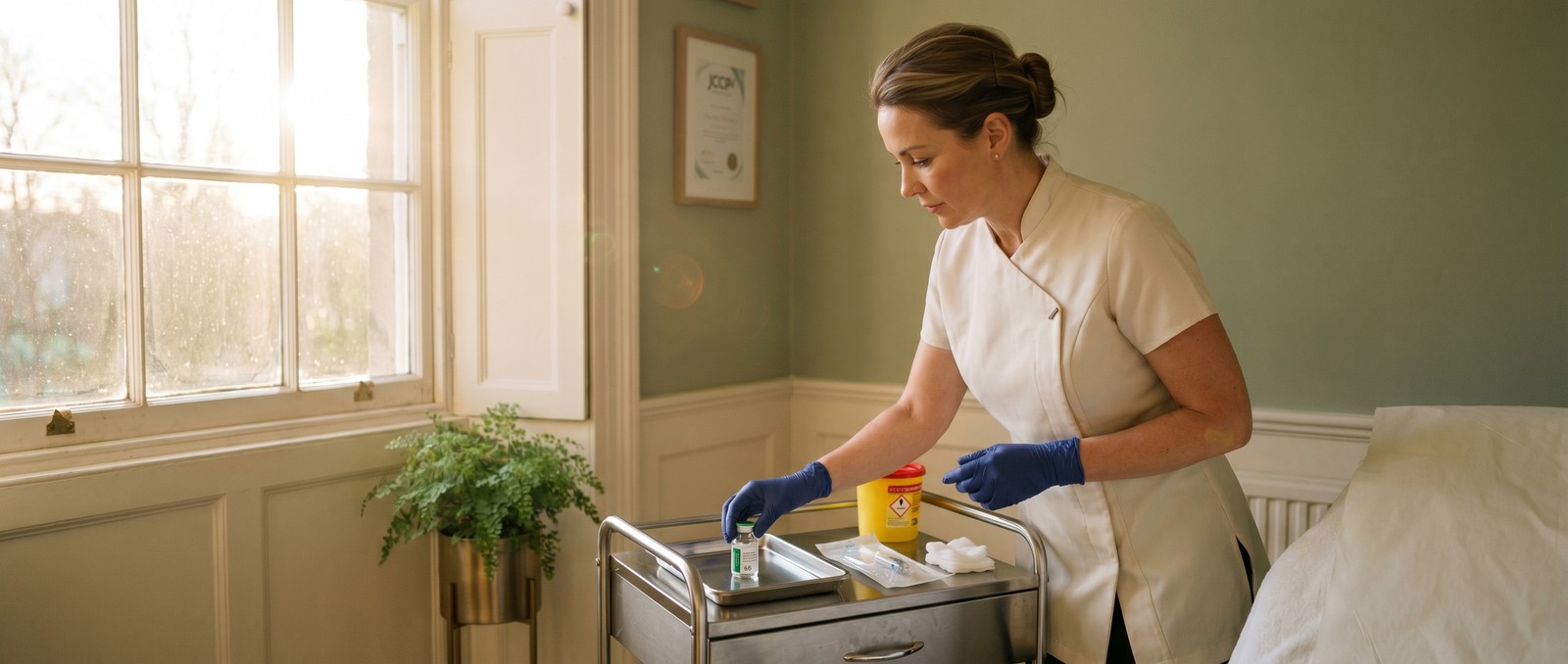
Software for UK aesthetic and cosmetic clinics
Saturday’s £400 Botox slot ghosts at 10am. Saturday slots, you never recover.
You’re an aesthetic-nurse principal running a clinic from a treatment room you’ve kitted out yourself, or a cosmetic-led dental practice doing Botox and dermal filler alongside the chair, or a doctor-led aesthetic clinic running on Pabau with a Consentz layer for photo consent. The slot ticket is £200-£800 and the package purchase - six sessions, three-area Botox plus filler maintenance - compounds it. Saturday is the slot you cannot afford to lose. The JCCP audit is in eight weeks and the photo consent + treatment record + practitioner credentials + product batch numbers live in four different places. Your patient texts at week three asking you to remove her before / after image and you’re trawling Pabau for her consent record. The MHRA POM-S rules have tightened on remote prescribing and your prescriber’s notes still sit in a WhatsApp thread.
This page is for aesthetic clinics specifically - the clinics hub covers the cross-clinic operational loop. What’s on this page is the aesthetic-distinct moments: the photo-consent vault, the audit-pack assembly, the POM-S prescriber wrinkle, the Saturday-Botox slot economics, the before / after gallery as the marketing engine. If you’re a mixed-modality clinic (some general dental, some hygienist-led, some non-aesthetic energy-based treatments), the hub is also worth reading.
What your week actually looks like
- Saturday 10am - a £400 Botox slot ghosts. Reminder went out Friday, no reply. Three patients were on the waitlist for that slot; none of them got messaged.
- New patient at 6pm Tuesday - full medical history, contraindications screen, photo consent, signed treatment plan, T&Cs - five pages she skims at reception and the contraindications get missed.
- Before / after photos from last Tuesday’s case - on three phones, in iCloud, half in Pabau. She texts at week three: “can you not use my image”. You’re hunting through everywhere.
- POM-S prescriber notes (Botox is prescription-only; the prescribing professional has to satisfy the face-to-face rules per the tightened MHRA position) - currently in WhatsApp between you and the prescribing GP or independent prescriber.
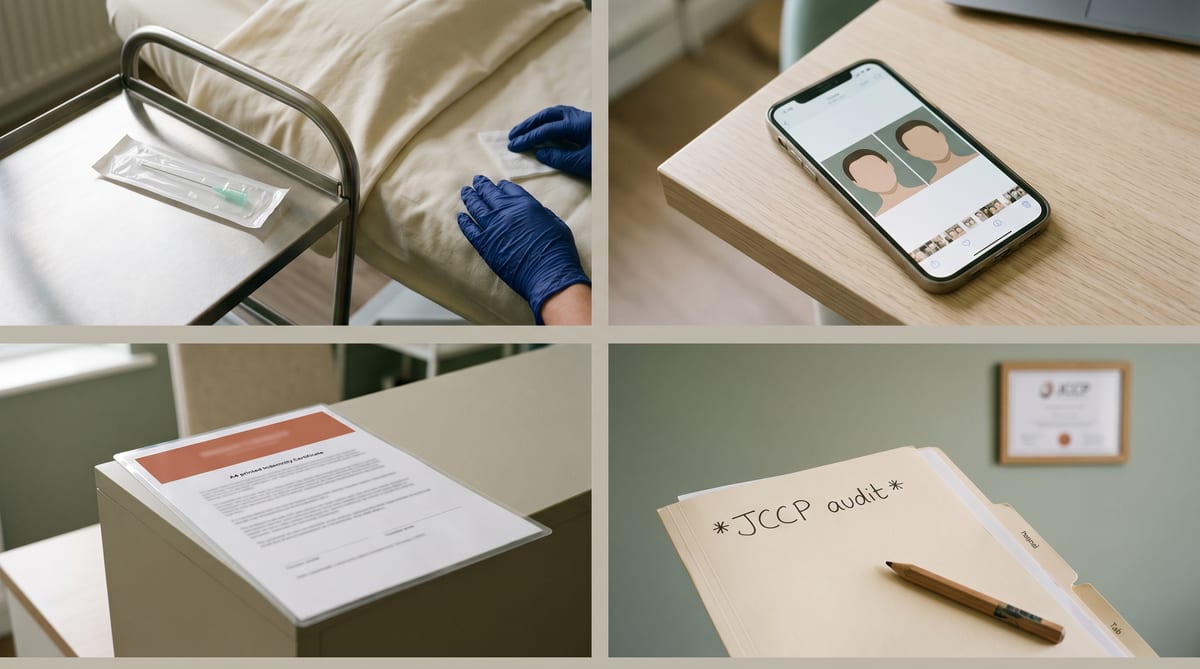
- JCCP audit in eight weeks - photo consent per patient, treatment records with product + batch number, indemnity certificate current, JCCP / Save Face member status, MHRA Yellow Card adverse-event entries. Currently a Friday-evening assembly job.
- The package patient (3 areas Botox + 1 syringe filler maintenance, six-monthly) - there’s no software shape for the package; you track it in a Google Sheet.
- Saturday morning Instagram DMs - six enquiries by 11am, two of them serious, four tyre-kickers, reception’s away till Monday.
- “My friend got her Botox at a salon in town for £85, can you match it?” - the unregistered-injector conversation, the indemnity-and-recourse line, the that’s not the procedure you think it is line.
- The before / after gallery on Instagram - every clinician forum says it’s the only marketing that works. Your competitor posts daily and her bookings reflect it. You’ve got eight weeks of cases on your camera roll and never posted them.
Example problems we could solve
1. The photo-consent vault that doesn’t fall apart at week three
The week-three-text moment: the patient texts at week three saying “don’t use my picture”. The before / after is already in your Instagram drafts; the consent for clinical record is in Pabau; the second consent for the gallery was on a separate sheet she signed in the chair. You’re hunting through three places and the longer you take the more anxious she gets.
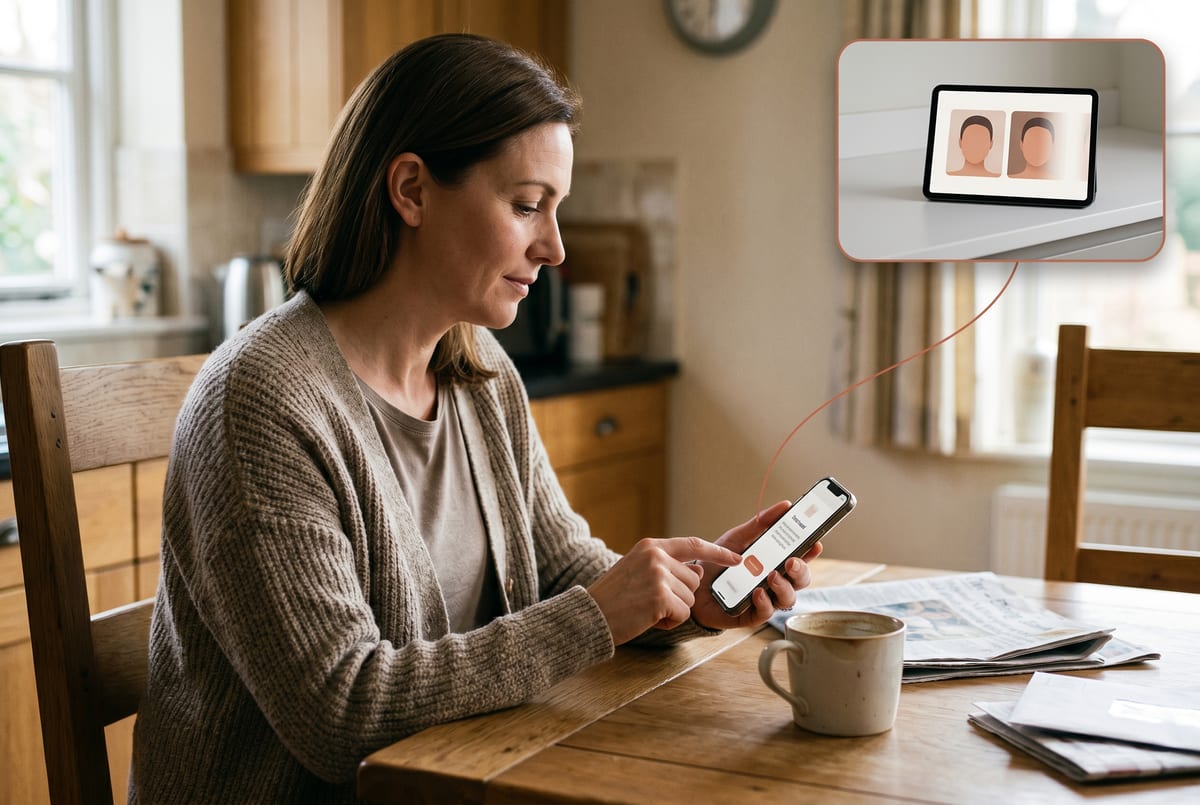
Solved looks like: every photo captured against a patient lives as a structured asset with three consent states attached - clinical record only (default; never leaves her file), practice-internal training (the principal can show it to colleagues), external marketing / before-after publication (the photo can go on Instagram, GBP, the website). Consent is captured per-image at the moment the photo’s taken on the practitioner’s phone, inline in the same form, not on a separate sheet. The patient gets a withdraw-consent link she can use herself any time; tapping it pulls the image from any external surface within minutes, keeps it in the clinical record (because clinical records carry a retention obligation), and writes the withdrawal-event to the audit log so the JCCP / Save Face audit pack carries the trail. The longer version lives at /solutions/client-onboarding-and-intake.
2. The audit pack that’s ready in fifteen minutes, not a Friday evening
The eight-weeks-out moment: JCCP audit in eight weeks. You need photo consent per patient, treatment record with product + batch number, indemnity certificate current, JCCP / Save Face member status, MHRA Yellow Card entries if any adverse events. Last time it took four evenings.
Solved looks like: every treatment captured against a patient pre-assembles its own audit-relevant artefacts as it happens - consent for the procedure, consent for the photo (per state above), treatment record with the product name, manufacturer, batch number scanned from the vial label at the moment of injection (so MHRA traceability works if there’s an adverse event), the practitioner who delivered, the prescriber who authorised. On the clinic side, the indemnity certificate (Hamilton Fraser / Cosmetic Insurance Group), the JCCP / Save Face member status, the MHRA Yellow Card adverse-event log, the practitioner credentials and DBS state all sit in one place with their renewal dates visible. When the audit window opens, the assembly is select the audit period → download - the pack renders against the captured trail. As the local-authority licensing pieces phase in and the JCCP / Save Face standards evolve, the audit-pack assembly reconfigures rather than gets rebuilt. The longer version lives at /solutions/compliance-evidence-record.
3. The POM-S prescriber loop that doesn’t sit in WhatsApp
The WhatsApp-script moment: Botox is POM-S - the prescribing professional has to do face-to-face consultation per the tightened MHRA rules. Currently you take the patient’s consultation, send her details to your prescriber by WhatsApp, get the script back, deliver. The prescriber’s notes are nowhere proper and the audit-side trail relies on three separate chat histories.
Solved looks like: the prescriber-side workflow as a tracked loop. Patient consultation captured against her record by you, the practitioner; the prescription request goes via a structured channel (not WhatsApp) with the patient’s relevant history pre-attached; the prescriber’s face-to-face consultation (video where the rules allow, in-person where they don’t) is recorded as an event against the patient’s file; the script issues as a structured object - product, dose, patient identifier - and delivery happens against that script with the batch number captured at injection. The audit trail (consultation done, script issued, product delivered, batch logged) assembles itself for any subsequent enquiry. The build doesn’t decide what’s legal - that’s between you, the prescriber, the MHRA, and the GMC / NMC / GDC depending on the prescribing professional’s regulator - but the evidence is there if asked. The longer version lives at /solutions/multi-channel-comms-thread.
4. The Saturday slot that fills itself
The Saturday-10am moment: £400 Botox slot ghosts. Three patients are on the waitlist; none of them got messaged. By Saturday lunch the slot’s lost and they’ve gone elsewhere.
Solved looks like: the no-show recovery from the hub, tuned to aesthetic slot economics. Booking → 48h + 24h reminder via WhatsApp where she’s onboarded; the 24h reminder carries a “need to change? tap here” one-tap reschedule that opens her next-available slot at the same clinician. When the slot flags opening soon, the waitlist queue fires with a 90-minute booking window (Saturday slots move faster than weekday slots), and the matches are clinician + treatment-type + time-of-day specific, not just date-and-time. Package-purchase patients (the six-session contract, the 3 areas + maintenance people) get first refusal on cancellations of their preferred clinician’s slots - the package is a relationship, not a transaction. Aesthetic no-show economics are more brutal than other clinics (a £400 slot won’t soak up with a generic walk-in), and the build is shaped accordingly. The longer version lives at /solutions/resource-and-waitlist-yield-recovery; the cross-clinic recall + reminder cascade behind it lives at /solutions/recurring-service-recall - the same engine handles the six-monthly package-maintenance cycle so a package patient never quietly drifts off the books between sessions.
5. The before / after gallery as the marketing engine - at last
The camera-roll moment: every clinician forum says “before / after photos are the only marketing that works”. You’ve got eight weeks of cases on your camera roll. You’ve never posted. Your competitor posts daily and her bookings reflect it.
Solved looks like: the photo-consent vault from problem 1 doubles as the content source. For every patient who’s consented to external publication, the before / after pair assembles automatically (same angle, same lighting; the photo capture cues the practitioner for the standard frames at before and after). The assembled pair drops into a scheduled-posting queue with a practitioner-credentials caption template (your name, NMC PIN where relevant, JCCP membership, the treatment, the product class without manufacturer-name-as-endorsement where the regs require). You approve on your phone in sixty seconds before each one goes live; scheduled posting to Instagram, GBP, and Facebook from one queue; the treatment-tag log carries through to “that practitioner does that treatment, want to book?” on the GBP side. It’s impossible to not post - and impossible to post without the consent state cross-checked. The longer version lives at /solutions/content-and-portfolio-cadence.
Closest builds we’ve shipped
- mendbuddythe agent platform behind the WhatsApp-first reminders and the waitlist-match flow in problem 4, plus the Instagram-DM triage that lands aesthetic enquiries into the diary. Trained on your aesthetic-scope language and your practitioner-voice. See /case-studies/mendbuddy.
- planpostour social-media scheduling software. The before / after gallery in problem 5 publishes through planpost; the patient-education content calendar (post-treatment aftercare, seasonal aesthetic prep, the what to look for in a registered injector trust thread) runs there too. See /case-studies/planpost.
- pharmaceutical-analytics.coma custom analytics dashboard we built for an analytics consultancy. The package-conversion-by-clinician and Saturday-slot-recovery KPI surface is the same shape: operational data captured at every patient touchpoint, decision dashboard for the principal. See /case-studies/pharmaceutical-analytics.
FAQ
Will the photo-consent vault work with Pabau / Consentz / Aesthetic Nurse Software?
Pabau and Consentz both expose APIs we read and write against; the vault sits over the top with its own consent-state model (three states, per-image), keeps the PMS as the system of record for the clinical entry, and adds the patient-controllable withdrawal flow and audit log around it. Aesthetic Nurse Software - depends on the install; we confirm in discovery.
What if the phased aesthetic licensing rules change again?
The build is wired against the practitioner-credential + product-batch-traceability + MHRA Yellow Card layer because those are stable across whatever licensing form lands. As the JCCP / Save Face standards evolve and the local-authority licensing pieces phase in, the audit-pack assembly reconfigures rather than gets rebuilt.
Can the system handle the prescriber-not-on-site flow legally?
The build doesn’t decide what’s legal - that’s between you, the prescriber, the MHRA, and the GMC / NMC / GDC depending on the prescribing professional’s regulator. What it does is record the consultation, the script issue, the product batch, and the patient identifier in a structured trail so that whatever the prescriber’s regulatory frame is, the evidence is there if asked. The face-to-face question stays with the prescriber.
Do you handle CQC registration where it applies to my premises?
No. CQC registration where it applies (it doesn’t for every aesthetic provider - depends on the procedures you offer and the regulated-activity test), JCCP / Save Face membership, indemnity, and complaint-handling are all clinician-side or practice-owner-side accountabilities. The system makes the evidence trail assemble as you work; the registration itself stays yours.
Will the before / after engine post images of patients who haven’t consented?
No. The consent state per image is the gating control - the gallery feed only includes patients whose latest consent state is external marketing / before-after publication. The moment a patient updates her consent (via her own withdraw link), her images drop from the feed within minutes and the corresponding posts pull from external platforms.
What does it cost?
Every build is scoped per practice - depends on practitioner count, treatment mix, whether the photo-consent vault + audit-pack + before / after engine are all in scope, what your current PMS is. We talk it through, agree price in writing. See pricing.
Up to the hub
← UK private clinics (hub) · Dental (sibling) → · Private GP (sibling) → · Vet (sibling) →
Tell us about your clinic
What treatments, what practitioner count, what package economics, where the photo-consent and audit-prep pain sits - Saturday slots, week-three consent revisions, the JCCP folder. Send an enquiry - we’ll come back with a sketch of what we’d build. No calendar, no demo. Email reply, scoped sketch, you decide.