


Software for UK independent wedding suppliers
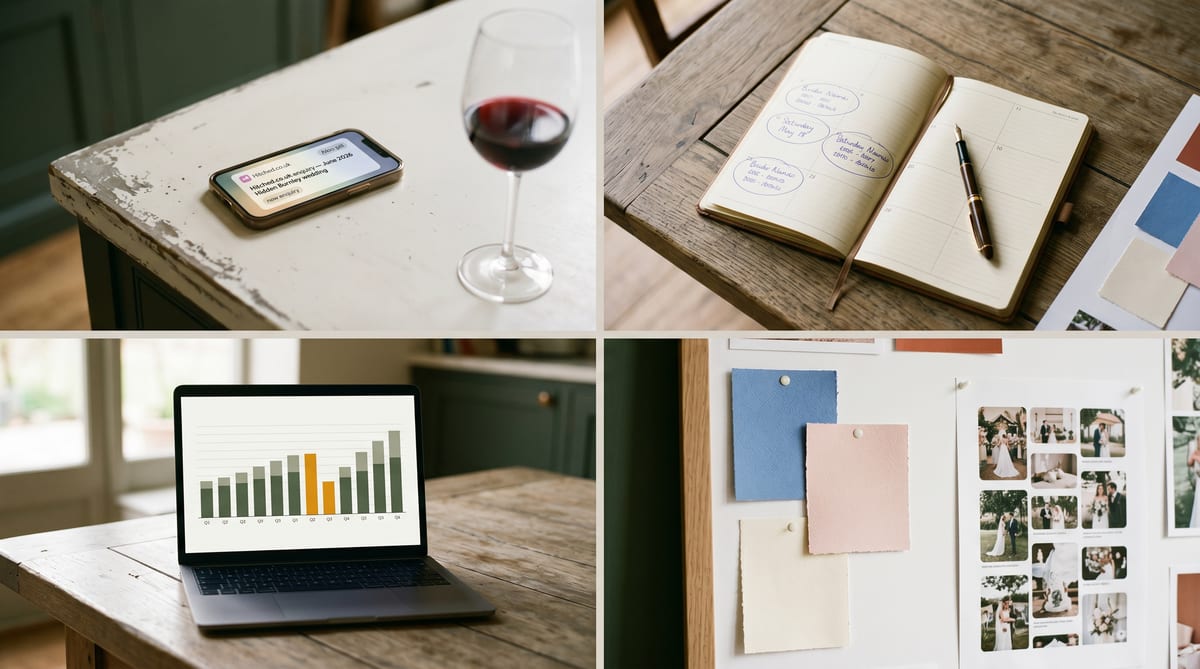
Hitched enquiry came in 10pm Saturday after a venue tour. I saw it Sunday afternoon. Three other florists had already replied - one within five minutes. I’m not on her Pinterest board any more. Twenty quid a month on Hitched Premium for that.
You’re the florist running a wedding-led studio out of a converted barn in Suffolk, or the photographer with a back-catalogue Pinterest board and an October edit-cave that’s already booked for autumn, or the cake-maker who works from a domestic kitchen and a 5-star FSA rating, or the venue-dresser running an eight-cubic-metre van across three counties on a Saturday morning. The Hidden Burnley adjacency is real - the venues that book the day book the suppliers who deliver it, the preferred-supplier list at one good venue is worth thirty thousand pounds a year of inbound enquiries, and the venue-supplier relationship is genuinely the most valuable single channel in your business. The stack is the universal mix - Hitched.co.uk + Bridebook + Guides for Brides + Instagram DM + Pinterest + your own Squarespace site + HoneyBook or Studio Ninja or Tave or Dubsado for the CRM + Pixieset or ShootProof or Pic-Time for gallery delivery + Mailchimp for the post-wedding newsletter + Stripe and the bank-mandate system for the deposits + Xero for the books - and nothing connects to anything else. So the 10pm Saturday Hitched enquiry sits unread until Sunday lunchtime, the May Saturday three couples want gets converted into one booking and two awkward apologies, the bride who changed her colour scheme three times between booking and wedding day arrived with a brief you’d half-forgotten, the October edit-cave actually started in August, and the Q3 cashflow trough between the Q1 deposits-already-spent and the Q4 balances-not-yet-paid is the conversation with your accountant you’ve been putting off.
We make custom software for UK independent wedding suppliers - scoped per studio, sized to the bit between the studio you actually run and the Hitched enquiry that’s a Stripe-paid deposit by 10:15 on the Saturday it lands, the May Saturday that fills the second-choice couple onto June 25th with grace, the bride’s brief that re-surfaces six weeks before the wedding so the colour-scheme change lands in time, the cashflow that forecasts itself across eighteen months so the Q3 trough has a plan, the best-of-August that publishes itself to Instagram and Pinterest and GBP with the venue tagged. Not a HoneyBook replacement - the US-shaped CRM is fine if it works for you. Not a Hitched.co.uk / Bridebook / Guides for Brides side-step - the lead aggregators bring the customer, you’d be mad to walk away. The bit between the CRM that records what you booked and the studio that actually runs Saturday-on-Saturday - that’s the bit we build. Hidden Burnley is the venue-side build we already ship; this is the supplier-side companion, and they share the catchment.
What you spend your week on that you shouldn’t have to
- Hitched enquiry 10pm Saturday after the bride’s venue tour. By Sunday lunch when you see it, three other florists in the catchment have already replied - one in five minutes. The first reply gets sixty percent of the viewings; you’ve sometimes made third place. Your average first-response time is three hours. The supplier ranked above you in the Hitched.co.uk listing has it on five minutes flat.
- Saturday May 18th. Three brides have asked for it. You can do one. The two you can’t take are the awkward calls; one of them was at a venue tour at Hidden Burnley last weekend and is leaving a review somewhere whatever you say. The Bank-Holiday-Saturday pricing trick (30% higher) works for half the couples; the other half balk.
- Bride paid £200 deposit in January. Wedding’s October. You spent her £200 on Holland flowers in March for the spring wedding-fair display. By July her balance covers the May tax bill. By September you’re tight; by October you’re fine. The Q3 cashflow trough is annual and predictable and still surprises you every year.
- Booked the photographer slot in March 2024 for a wedding in September 2025. Bride changed her colour scheme three times. Her hair stylist dropped out and was replaced. The original brief is in HoneyBook somewhere; on the Friday night before the wedding you’re scrolling her Instagram for her mood board because you can’t remember which version of the brief is current.
- Hidden Burnley sends you four bookings a year off their preferred-supplier list. Le Talbooth’s list got you on after six months of showcase-event sample work. Holkham Hall is still on the “in six months we’ll review” hold. The venue-supplier relationship is gold; you treat it manually because none of the CRMs model it.
- Six weddings in August. The edit-turnaround you promised on each is six weeks; the actual is already on twelve and you’ve got two new ones landing Friday and Saturday. The October edit-cave is real and you started it in mid-August. The “sneak peek twenty-four hours” promise eats every Sunday after a wedding.
- Hair-and-makeup morning. 7am bride, 8 the first bridesmaid, 8:45 the second, 10:30 mum, photographer arrives 11, ceremony at 12. One hairdryer, one make-up bag, two pairs of hands. Three timezones in one bedroom. The phone in your pocket is buzzing with the day’s-of WhatsApps from the next two weeks’ brides.
- Cake makers in August - the buttercream-in-heat anxiety is real. You quoted “temperature-controlled in transit” against the marquee whose interior gets to 32°C. The FSA-5* discipline is intact; the Natasha’s Law allergen labelling is intact; the surface that’s about to slide off the second tier is what keeps you up Friday night.
- Vintage car booking for the wedding at 2pm Saturday. The 1937 Bentley needs a thirty-minute warm-up and dry weather. Plan B is a modern classic the couple didn’t book and won’t be happy about. The weather forecast on the Tuesday before is the conversation you’ve been avoiding.
- Wedding band on Saturday - PA agreed in March, lighting agreed, set-list agreed, sound limiter at the venue confirmed. Couple wants an 1am encore. The limiter at the venue cuts power at midnight. The awkward silence in the room at 12:01 was your problem before the band’s even unplugged.
These aren’t problems HoneyBook’s next release is going to solve. They’re the layer between the CRM that records what you booked and the studio that replies in fifteen minutes, holds the Saturday with grace, forecasts the cashflow, revives the brief, publishes the portfolio, gets the photos out before the cave. That’s what we’d build - with Hidden Burnley as the direct venue-side anchor so the venue-and-supplier relationships you’re already running on goodwill get the software equivalent.
Example problems we could solve
Five things we hear most often from UK independent wedding suppliers - with what the solved version looks like in your week. All five apply universally across florists / photographers / cake-makers / stationers / hair-and-makeup / dressers / bands / planners / celebrants / transport - with the texture (edit-pipeline for photographers, multi-bride morning for HMU, day-of logistics for dressers, sound-limiter for bands, scripting for celebrants) scoping in discovery. Solo studios often start with problems 1 + 2 + 5; multi-supplier studios typically need all five.
1. The 10pm Hitched reply at 10:15 - and the bride who’s on your Pinterest board by Sunday
The 10pm-Saturday moment: Hitched enquiry came in 10pm Saturday after a venue tour. You saw it Sunday afternoon. Three other florists had already replied, one in five minutes. First reply gets 60% of viewings; you averaged third place last year. The wedding-supplier-distinct weight is that the lead aggregators (Hitched.co.uk + Bridebook + Guides for Brides) are essentially auction-based with the “first to reply at quality” taking the conversion - the supplier who’s fastest is the supplier who books. The build is shaped around making fifteen-minute first-reply structurally guaranteed across every channel, even at 10pm Saturday when you’re at your daughter’s birthday.
Solved looks like: the 15-minute speed-to-reply layer across every lead-source channel. Hitched.co.uk / Bridebook / Guides for Brides leads feed in via webhook or scheduled pull; Instagram DM, Facebook DM, web-form enquiry, missed inbound call all route into the same queue. Within fifteen minutes of arrival (whether that’s 11am Tuesday or 10:14pm Saturday), the SMS / WhatsApp reply goes out in your voice with a mini-portfolio of three relevant images (matched to the venue + colour-palette + season the enquiry mentions), a one-line warm response, and the consultation-booking link - “Hi Sarah, thank you for getting in touch about your June 2026 wedding at Hidden Burnley. Lovely venue. I’d love to talk through what you’re planning - here are three weddings I’ve worked on there [links]. I’ve got a 30-minute consultation slot available this Thursday at 3pm or Saturday at 11am - pick whichever works, or reply CHAT and we’ll find another time. No rush; couples often take a week or two to decide on suppliers”. The reply lands in fifteen minutes flat, day or night, on the channel the bride is already messaging on. The bride sees the response in the same evening as the venue tour; you wake up Sunday to a consultation already booked or a question already asked.
2. The Saturday-cap triage that fills the second-choice couple onto June 25th with grace - instead of an apology
The May-18th moment: Saturday May 18th. Three brides asked. You can do one. The two you can’t take are the awkward calls. One of them was at Hidden Burnley last weekend - she’s posting about her wedding journey on Instagram with twelve thousand followers. The apology can’t be a one-line “sorry, fully booked”. The wedding-supplier-distinct weight is that Saturday-cap is a structural reality of a wedding business and the “sorry, fully booked” call is what turns potential future advocates into reviewers-who-bear-a-grudge. The build is shaped around making the no-conversation as good as the yes-conversation - with an alternate date, a genuine warm tone, and a wait-list that’s actually monitored.
Solved looks like: the Saturday-availability layer as a structured calendar with a waitlist + alternate-date offer-up engine. When three (or more) couples enquire about the same Saturday, the system holds them all in a structured queue with timestamps + venue + decision-strength signal (Pinterest-board-saved-from-Hitched: high; web-form-only-no-Pinterest: lower); your consultation slot books the most-suitable couple (your judgement, with the data alongside), and the other two automatically receive a thoughtful, in-your-voice alternate-date message - “Sarah, I’d love to have worked on your wedding - May 18th’s already taken, and I want to give your day the full attention it deserves. Here are the Saturdays I’ve got open that summer - June 25th (similar palette + venue style), July 9th, August 6th. If any of those would work, I’d be delighted; if not, no obligation and I really hope you find the perfect supplier. I’ll keep you on a wait-list just in case the 18th opens up between now and then”. Couples who flex to an alternate Saturday convert at meaningful rates; the ones who can’t keep the goodwill rather than the bad review. For peak-season weekends (May Bank Holiday, August, the Saturdays around the Cambridge college schedule), the same engine surfaces the “premium pricing window” triage so you can structure the higher-rate Saturdays explicitly rather than feeling guilty about quoting them.
3. The brief that re-surfaces six weeks before the wedding - eighteen months out, not on Friday night with your phone in your hand
The eighteen-month-engagement moment: booked March 2024 for September 2025. Bride changed her colour scheme three times. Her hair stylist dropped out, was replaced. By the time you’re shooting the wedding you’ve forgotten the original brief. Friday night you’re scrolling her Instagram for her mood board. The wedding-supplier-distinct weight is that an eighteen-month engagement is genuinely long enough for a wedding to evolve materially from its booked version - the bride doesn’t always think to tell every supplier of every change, and the build is shaped around making the brief a live document the bride and supplier maintain together. So the wedding day is built on the current vision, not the one captured in a HoneyBook form in spring 2024. The cadence is paced to the wedding-planning calendar (eighteen-month engagement window, brief revival at six months / three months / six weeks out, plus the dress-fitting / hen-do / rehearsal-week milestones) - not to the trade-quote calendar that the chase-ladder uses for electrician or plumber work.
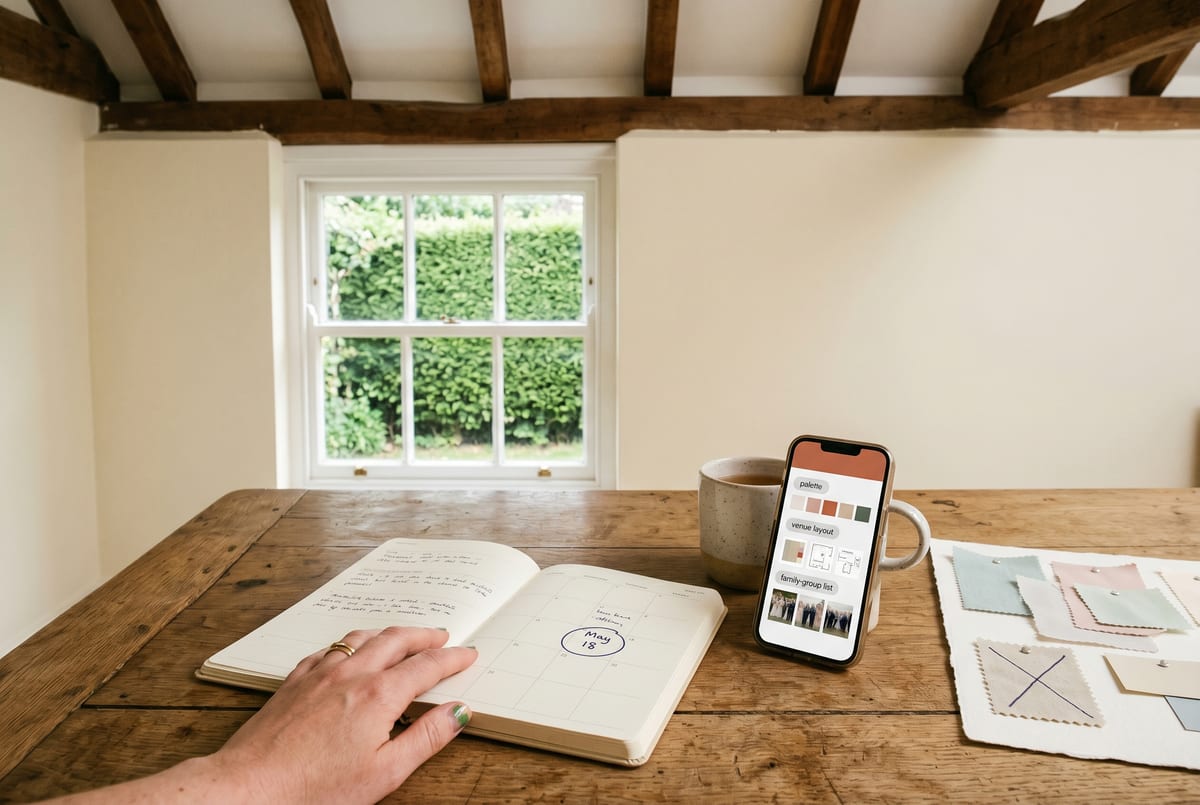
The full build: Quote & Chase Ladder - the quote-and-chase ladder shaped for an eighteen-month engagement window with brief-revival nudges paced to the wedding-planning calendar. Referenced across many verticals; the wedding-supplier version’s vertical-distinct features are the eighteen-month engagement window (not the eight-week trade-quote chase), the per-supplier brief object captured at consultation or deposit (colour palette, mood-board links, venue + ceremony format, key family members, special-request flags, timeline draft), the six-month / three-month / six-week revival cadence (“hi Sarah, quick check-in - wanted to make sure your wedding-day vision is still the one we captured back in [month]”), the wedding-calendar-milestone overlay (dress-fitting weekend, hen-do weekend, rehearsal-week - moments where the bride’s likely to be thinking about the wedding anyway and a check-in lands warmly), and the cross-supplier consent layer where (with the couple’s permission) a change to the colour palette propagates to every supplier on the wedding-day team so the florist sees the new palette, the dresser sees the new ceremony layout, the photographer sees the new family-group list - all from the same updated brief. On the Friday night before the wedding, you open the case file on your phone and see the current brief, not the eighteen-month-old original.
4. The Q3 cashflow trough that has a plan - eighteen months out, not on the Monday morning your accountant rings
The Q3-trough moment: bride paid £200 deposit January. Wedding’s October. By March you’ve spent her £200 on Holland flowers for a fair display. By July her balance covers the May tax bill. By September you’re tight. Q3 is the annual conversation with the accountant you always avoid. The wedding-supplier-distinct weight is that the deposit-balance cashflow structure is genuinely unusual (most service businesses are paid post-delivery; weddings are paid before delivery with a long lag), the Q3 trough is the predictable shape that nonetheless surprises the supplier every year, and the build is shaped around making the trough visible eighteen months out - so the planning conversation happens with options, not panic.
Solved looks like: the cashflow forecaster as a per-month projection over the next eighteen months built directly from the wedding pipeline. Every booking writes a structured cashflow record - deposit-paid date + amount, balance-due date + amount, supplier costs (flowers, prints, second-shooter, band PA hire, prop hire) with their typical payment terms, the tax-bill milestones (Self-Assessment payments on account in January and July, the VAT quarter if you’re VAT-registered, the cake-maker FSA inspection fee). The dashboard renders a monthly forecast eighteen months ahead - “April: £4,200 in (3 deposits + 1 balance) − £1,800 out = +£2,400; May: £2,800 in − £6,200 out (HMRC POA + insurance renewal + lens upgrade) = −£3,400; June: +£5,100” - with the running balance + threshold alerts (the “running below £2k of liquid by August at current trajectory” flag that fires in May). For the Q3 trough specifically, the forecast surfaces it three months ahead with the “this is what next year’s August looks like, here’s the gap, here’s what would close it” commentary - the options being deposit-window adjustment (asking for a deeper deposit on bookings landing now), payment-plan structure on the next bookings (50% at booking, 25% at six months, 25% at four weeks), or the supplier-side expense smoothing (paying for next year’s Holland early when cash is good, not when it’s tight).
5. The best-of-August that publishes itself to Instagram + Pinterest + GBP - with the venue tagged
The Sunday-night-edit-post moment: best images of the year - captured in August, edited in October, published November. By March the post is old. Pinterest is where the brides find you. SEO-on-Pinterest is a separate skill you don’t have. The Sunday-night edit-post cycle is the unpaid second job. The wedding-supplier-distinct weight is that the portfolio-publishing cycle is the difference between a studio whose pipeline fills itself from search and one whose pipeline depends on Hitched.co.uk’s monthly subscription - the work happens Sunday night unless it’s structured to publish itself. The build is shaped around making the best-of-each-wedding genuinely become next year’s inbound, with the venue tagged so the venue-supplier relationship gets credited every time.
Solved looks like: the portfolio-publishing cadence as a structured monthly engine that takes the gallery-delivered set and turns it into the next twelve months of marketing across Instagram + Pinterest + GBP + Facebook. When the gallery (Pixieset / ShootProof / Pic-Time) is delivered to the couple, a structured “select the best-of-this-wedding” prompt fires - you tap fifteen-to-twenty shots that are portfolio-worthy and tag the venue + the colour palette + the season; the system queues those into the publishing cadence with the couple’s consent already captured. Across the next thirty days, the best-nine grid posts to Instagram with the right tagging (the venue, the florist if collaborated, the dress designer, the location-tag - all set per supplier-type), the Pinterest set publishes with the bridal-board-friendly metadata (the location-keyword stack that Pinterest’s algorithm reads, the season, the style), the GBP post goes up with the local-search optimisation (“Suffolk wedding florist”, “wedding photographer Aldeburgh”, etc.), the Facebook post goes to the supplier’s page with the couple-friendly testimonial language. The couple’s consent is granular (some images yes, some no; venue-tagging consented to; testimonial OK), captured at gallery-handover, respected throughout. For visual-led suppliers (photographers + florists + venue dressers + cake-makers), the engine genuinely runs the portfolio-publishing rhythm that drives next year’s enquiries; for non-visual-led suppliers (bands, celebrants, planners), the same engine adapts to their content shape.
The closest things we’ve already built
- A private-hire event venue we’ve built end-to-end - the direct venue-side anchor for this supplier-side build: venues and suppliers run on the same wedding ecosystem, the venue’s preferred-supplier list is the supplier’s most-valuable channel, and the booking + deposit + ceremony-day comms pattern is shape-wise the same on both sides. The supplier-side build is the companion to that venue-side build.
- mendbuddy - our multi-channel AI agent platform. Behind the 15-minute Hitched.co.uk / Bridebook / Guides for Brides / Instagram DM speed-to-reply in problem 1 (the agent that drafts the in-your-voice mini-portfolio response with the right images for the venue + palette the bride mentioned, day or night), the Saturday-cap triage messaging in problem 2, and the six-months / three-months / six-weeks brief-revival WhatsApp in problem 3. Voice + WhatsApp + SMS + web chat. See Mendbuddy.
- planpost - our own-brand social-media scheduling SaaS. Powers the portfolio-publishing engine in problem 5: structured publishing across Instagram + Pinterest + GBP + Facebook with the per-couple consent and per-venue tagging built in. The proof that a marketing-output build can be shipped as a software product (not an agency retainer). See Planpost.
- pharmaceutical-analytics.com - analytics dashboard built for an analytics consultancy. The supplier KPI surface in problems 2 + 4 (bookings vs Saturday-capacity by month, lead-source attribution by quarter, cashflow forecast eighteen months out, edit-pipeline state for photographers) sits on the same pattern. See Pharmaceutical Analytics.
If your studio’s narrower than the whole of the above
Most of the wedding-supplier shapes we work with - solo florist, solo photographer, cake-maker, stationer, hair-and-makeup artist, venue dresser, band / DJ, planner / coordinator, celebrant, vintage-car / transport - share most of the hub above. The bits that genuinely differ scope in discovery: a solo florist often starts with problems 1 + 2 + 5 and adds 3 + 4 when the engagement-length conversation lands; a photographer needs problem 5 with the edit-pipeline tracker (wedding-shot date → edit-due-date → progress state) and the sneak-peek-24h promise tracked structurally; a cake-maker needs the Natasha’s Law allergen labelling + the FSA-5* inspection cadence layered into the back office; a band / DJ needs the sound-limiter conversation tracked structurally on the case file; a celebrant needs the script-revision cadence shaped to the bride’s review preferences. None of these warrant their own page yet - they’re a discovery conversation, not a separate buyer.
Adjacent verticals
- Hospitality (wedding venues)the direct venue-side anchor; the studio’s venue build powers the same wedding ecosystem from the venue side. Most suppliers in this catchment have meaningful venue-side relationships that the supplier-side build extends.
- Pet servicesfor the recurring-DD + waitlist + seasonal-peak pattern; many small suppliers have a sister business in pet services or share customer demographic.
- Holiday letsfor the Saturday-changeover + photo-content + direct-bookings pattern; cottage owners in Aldeburgh / Lavenham / Southwold drive a meaningful share of wedding-weekend accommodation.
- Charitiesfor the photographer / florist / dresser doing charity-event work in the off-season (charity-galas + fundraising-balls are the year-round supply chain for many wedding suppliers).
- Craft food and drinkfor the cake-maker / drinks-supplier / artisan-caterer crossover where the wedding work is a slice of a broader artisan-food business.
FAQ
Will the 15-minute reply layer work with our Hitched.co.uk supplier dashboard / Bridebook portal / Guides for Brides listing?
Yes - Hitched.co.uk and Bridebook both expose lead feeds (Hitched via the supplier inbox, Bridebook via the directory dashboard); Guides for Brides routes leads via email which we ingest the same way. The integration reads new leads as they land and routes them into the 15-min reply queue with the venue + palette + season parsed from the enquiry. Instagram DM, Facebook DM, web-form, and inbound call all feed the same queue. The reply lands in fifteen minutes flat, day or night.
Will the AI agent reply in our voice - not a generic supplier voice?
Yes - the agent is trained on your actual past responses, your portfolio’s image library, your venue-specific testimonials, and your tone (warm vs polished vs informal - whatever the studio reads as). Each generated reply is reviewable before send during the first month of operation while the voice settles in; after that, replies that match the trained voice go straight out and the small percentage that flag for review (unusual budget, unusual venue, unusual brief) escalate to you.
Will the Saturday-cap triage work for our specific supplier type - florists / photographers / cake-makers / hair-and-makeup / etc.?
Yes - the underlying logic (multiple-couples-same-Saturday → triage with grace + alternate-date offer-up) applies universally. The texture of the alternate-date messaging adapts per supplier type (the florist’s alternate-Saturday conversation is colour-and-stem-availability shaped; the photographer’s is portfolio-style + sample-shot shaped; the cake-maker’s is design-and-tasting shaped; the HMU’s is bridal-party-size shaped). The wait-list mechanic and the consent / re-offer cascade is the same across.
Will the cashflow forecaster handle our specific tax / VAT / accounting setup?
Yes for Xero, QuickBooks, and FreeAgent. The forecaster reads your bookings as inflow events (deposits + balances on their structured dates), your supplier costs as outflow events (the Holland order, the second-shooter, the band PA hire, the prop hire - all on their typical payment terms), and your tax milestones (Self-Assessment Payments on Account in January + July, VAT quarter if VAT-registered, the FSA inspection fee for cake-makers, the insurance renewal). The 18-month projection updates as bookings land; threshold-alert wording is configured per supplier (some operators want a “liquid below £2k” flag, others want a “net-of-tax-saved below £500” flag - set per your accountant’s preference).
Will the brief-revival flow respect the bride’s pace and the couple’s comms preferences?
Yes - every cadence carries a couple-consent state captured at consultation; messages send via the channel the couple has opted into (WhatsApp / SMS / email); STOP / PAUSE / LATER replies are honoured immediately. The tone is gentle and check-in-shaped, not chasing-shaped - “hi Sarah, just wanted to make sure your wedding vision is still the one we captured back in March; anything changed in the last few months?” - paced to the wedding-planning calendar (six months / three months / six weeks out, plus dress-fitting / hen-do / rehearsal-week milestones), not the trade-quote calendar. Brides who have signalled they prefer minimal pre-wedding contact are skipped on cadence entirely.
Will the portfolio cadence respect the couple’s photo / venue / supplier-tagging consent?
Yes - the consent is granular at gallery-handover. Each image is tagged for use (portfolio yes, social yes, no, social-with-faces-blurred, etc.); the venue-tagging is consented to separately; the testimonial language is reviewed by the couple before public use. The publishing cadence respects all three layers, with the data captured against the couple-and-gallery record so any later withdrawal of consent (some couples change their minds when the wedding’s been a while ago) is honoured cleanly across every published channel.
Will the build handle the photographer-specific edit pipeline?
Yes - the photographer-side build adds the edit-pipeline tracker (wedding-shot date → edit-due-date → progress state) with the sneak-peek-24h promise tracked structurally, the gallery-delivery event integrated with Pixieset / ShootProof / Pic-Time (whichever you use), and the couple-side balance-trigger on gallery-approval where the deposit-and-balance is structured that way. The October-cave is the predictable backlog; the build surfaces it in early August so the conversation about second-shooter capacity or new-booking pacing happens before, not during.
What does it cost?
Every build is scoped per studio - depends on supplier type (florist / photographer / cake-maker / hair-and-makeup / dresser / band / planner / celebrant / transport), wedding volume per year, current CRM / gallery / Hitched.co.uk / Bridebook stack, and whether the build covers all five problems above or a subset. We talk it through, agree the price in writing. See pricing.

Tell us what your week looks like
What supplier type you run (florist / photographer / cake-maker / stationer / hair-and-makeup / venue dresser / band / DJ / planner / celebrant / transport), studio size (solo or 2-5 staff), volume per year (10 weddings, 30, 60+), your current CRM (HoneyBook / Aisle Planner / Studio Ninja / Tave / Iris Works / 17hats / Dubsado / Pixifi / Bonsai / nothing-but-a-spreadsheet), your gallery / portfolio stack (Pixieset / ShootProof / Pic-Time / Instagram), your lead aggregators (Hitched.co.uk / Bridebook / Guides for Brides / all / none). Where the operational pain lives - the 10pm Hitched enquiry, the May Saturday triage, the Q3 cashflow trough, the 18-month brief, the October edit-cave, the Sunday-night portfolio post. Send an enquiry - what you do, what’s slowing you down, what you’ve already tried. We’ll come back with a sketch of what we’d build and what it would cost. No calendar, no demo to sit through. Email reply, scoped sketch, you decide.