


The quote that doesn’t go silent on Thursday
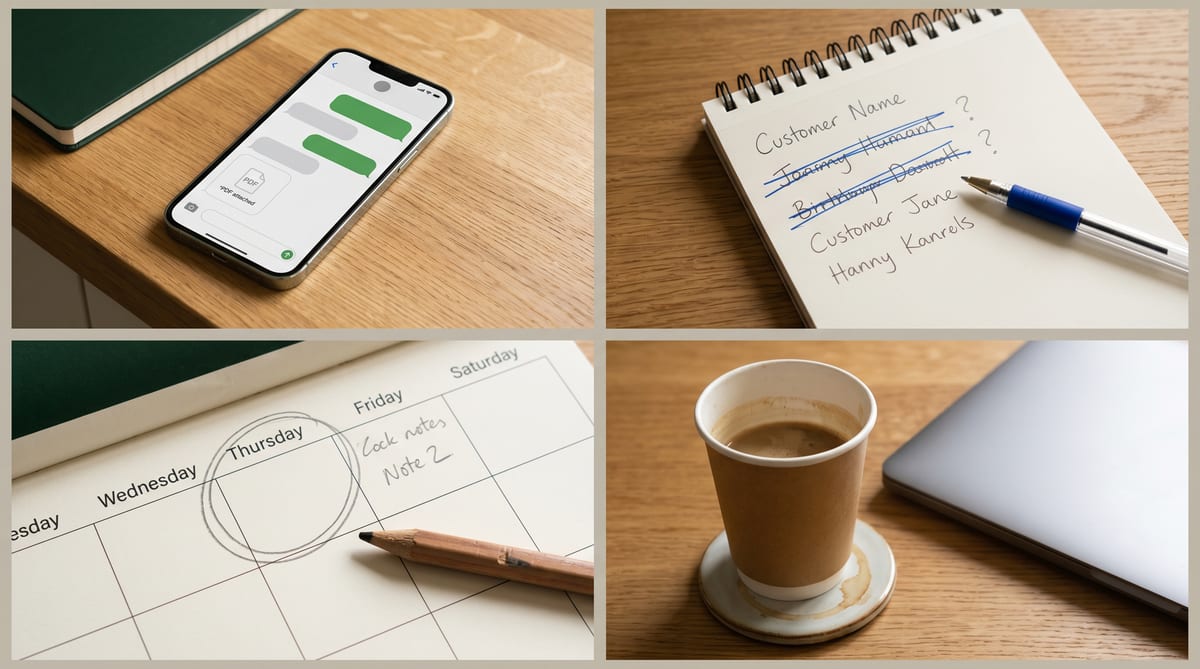
Sent the quote Tuesday evening. Read receipt Wednesday lunchtime. Friday a different van’s outside the house.
A quote sent on Tuesday lands on the customer’s phone. By Thursday the read receipt’s flashed. By Friday she’s gone with whoever followed up first - or whoever was £400 cheaper because they hadn’t priced for the part-day on the soil stack. Most UK trades and small businesses don’t lose quotes on price; they lose them on silence. The win rate on a quote that’s chased on a Tuesday-Thursday-the-following-Wednesday cadence is materially higher than the win rate on a quote sent and hoped - that’s the whole shape of this build.
This is the loop that runs while you’re on the tools. Every quote you send becomes a structured object, not an email and a hope. A nudge ladder runs on top in your voice - on the channel the customer actually reads, on the day they’re actually deciding - and the one-tap accept fires the deposit, the diary slot, and the “here’s what happens next” in the same beat. The shape is sealed against HC Electrical - the live trade-quote ladder running on the EICR and EV-installer side - and ports cleanly across reactive trades, high-ticket installs, and professional services proposals.
What gets lost between quote sent and quote signed
Every business loses the same thing in a slightly different shape. A few moments - pick the ones that sound like your week:
- Reactive tradesthe bathroom-fit quote sent Sunday evening that’s gone silent by Wednesday, lost by Friday to whoever rang on Monday.
- High-ticket installsthe £6,800 boiler quote where you sent three pricing options as a PDF and never heard back; the customer doesn’t know how to compare them and you don’t know that’s the problem.
- Bathroom and kitchen fittersthe Saturday-survey-then-fortnight-of-silence cadence, where the actual decision conversation happens between Sunday evening and Thursday lunchtime and nobody’s there to nudge.
- Device repair and garagesthe photo-estimate sent at 10:30am with no decision by 14:00; the car’s on the ramp costing you a bay, the customer’s at work not checking her phone.
- Consultants and boutique agenciesthe proposal that’s been opened, read 3 times Thursday, then silence with no follow-up because the next discovery call ate the afternoon.
- Wedding suppliersthe brief sent eighteen months out that drifts - colour scheme changes three times, photographer drops out, family politics - and the revival window slips past you.
- Letting agentsthe cert-and-remedial quote that’s queued behind the agent’s bookkeeper’s inbox; the property’s been off the market for three weeks while the £180 worth of work isn’t agreed.
- Wholesalers and B2Bthe line-item quote that’s gone to procurement and is now waiting for someone in head office to sign; you don’t know whether to chase or to wait.
These aren’t problems for a generic CRM. They’re the bit between quote sent and yes or no, which is where the win rate actually lives.
What solved looks like
1. The quote becomes an object, not a hope
The “I sent it, then nothing” moment: the quote went out as a PDF attached to an email, or as an SMS price band, or as a proposal-builder doc. You don’t know whether the customer opened it. You don’t know whether she’s still deciding. You don’t know whether to chase or to leave her alone. So you don’t chase, and a week later you’ve forgotten which quotes are still live.
Solved looks like: every quote you send writes to a structured record - the customer, the scope, the line items, the photos from the survey, the price, the validity window, the open / accepted / declined / archived state. The PDF (or the SMS band, or the proposal-builder doc) is generated from the object; the object is the source of truth. The Sunday-evening “what was outstanding” anxiety stops being a feeling - one screen, all the live quotes, sorted by worth-chasing-this-week.
2. The cadence reads the urgency off the original enquiry
The “everything on the same clock” moment: generic CRM cadences nudge everything on the same seven-day clock. A leak-detection enquiry doesn’t have seven days. A boiler quote has a fortnight. A wedding brief has eighteen months.
Solved looks like: per-vertical and per-quote nudge ladders that run against each open quote. The default trade-shape cadence: SMS at +3 days, email at +7 with the materials list re-attached, soft-close SMS at +14, “is this still on your roadmap or shall I park it” at +21, archived to the re-engagement list at +28. The cadence is tunable per quote - a leak-detection enquiry runs at hour cadence (the customer has water on the floor, not a bathroom on her mood board); a boiler-install quote runs at multi-day cadence; a wedding-supplier brief revives on six-week, twelve-week, and six-month bumps; a proposal in professional services runs the “opened-read-silent” trigger.
3. The nudges sound like you, on the channel the customer reads
The “this is a sales bot” moment: templated chase emails in corporate English with a smiley face. Customers know it isn’t you on the line. They tune out, or worse, they decide against on tone alone.
Solved looks like: the first nudge in each cadence is drafted by the agent and surfaces to your phone for one-tap send-or-edit. After the first ten quotes in a vertical, the agent’s learnt your voice well enough to send the routine nudges unattended; you keep the send-or-edit slot for the cases where the agent’s flagged something (the customer’s gone quiet after a price objection, the project’s slipped a category, the prospect’s about to drop into archive). Channel routing per customer: WhatsApp where they’ve opted in; SMS where they haven’t; email last because email response-time-expectations are slower; a voice call as the escalation when the deal’s worth it. The channel choice lives on the customer record, not on you remembering. Same voice training as the Trainable Inbound AI Agent - your past emails, your quote covering-letters, the way you describe what you do.
4. One-tap accept fires the deposit, the diary slot, and the what happens next
The “yes, then a week of admin” moment: customer says yes by reply. Now you have to manually raise the deposit, manually book the install date, manually send the confirmation, manually queue the materials, manually re-confirm the slot the day before. By the time you’re done with that, two other quotes have gone silent.
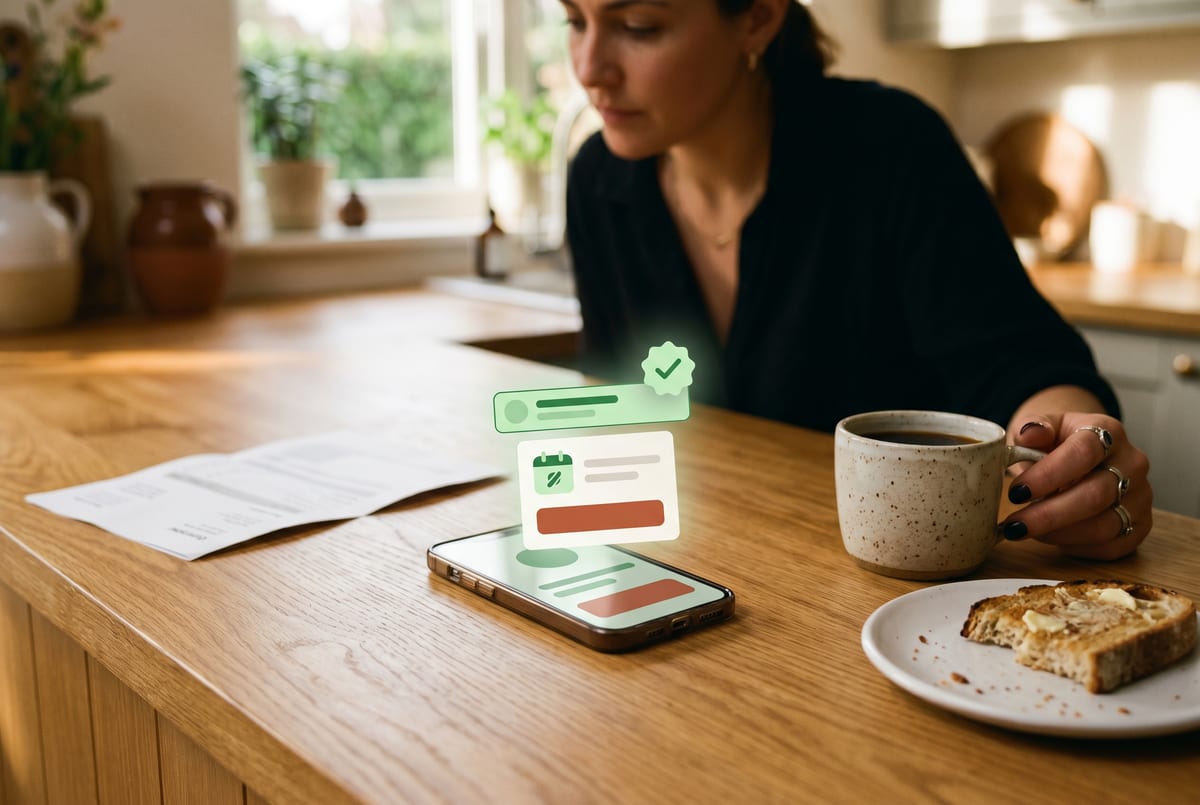
Solved looks like: the customer’s accept is a one-tap action. The deposit link fires in the channel she just replied on, using the payment provider you’re already on. The install or survey slot books into your diary against the engineer who’s actually free. The contractor-side scheduling queues the materials order if the quote’s tied to one. The “thanks, here’s what happens next” confirmation goes out in your voice. The hand-off to the Stage Payment & Retention Ledger (on the high-ticket install side) happens automatically - the deposit landing is the trigger.
5. One-tap decline tells you why
The “they ghosted” moment: half the quotes you lose, you don’t know why. You guess price. Sometimes it’s price. Often it’s the husband said no, the job’s been put off, the insurance is paying for it after all, we went with the boiler my dad used. None of that is in your data.
Solved looks like: the customer’s decline is a one-tap action with a reason from a short list - too expensive, gone with someone else, job’s not happening now, family’s changed their mind, waiting on insurance, other. The reasons log into a structured ledger that drives the quarterly “what we’re losing on” read-out. A decline isn’t the end of the conversation either - job’s not happening now moves to the re-engagement list with a polite check-in six months on; waiting on insurance moves to a thirty-day follow-up.
6. The dashboard answers the Sunday-night anxiety in nine minutes
The “I should ring people but I can’t remember who” moment: Sunday evening, thirty-one quotes sent over the last six weeks, eleven won, four lost, sixteen in quote sent, nothing heard. You’d like to ring them but you can’t remember which ones you’ve already chased once, which ones you said you’d come back to with a revised price, which ones are still warm.
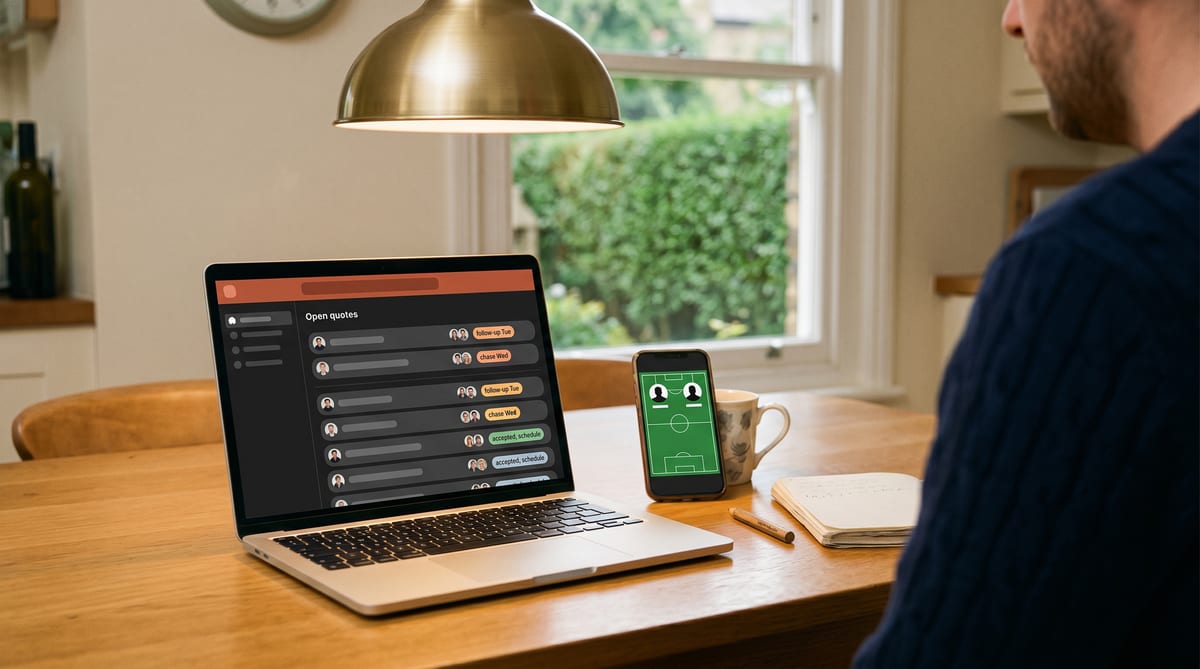
Solved looks like: every open quote with its current state and next action, sorted by worth-chasing-this-week score (ticket size × probability-given-state × days-to-validity-expiry). Nine of the sixteen are sitting at +14 with no response - the cadence’s already fired the soft-close on six of them, and three want voice-call escalation per the scoring. Two of those three the agent’s already drafted the call-script for, with the original quote, the photos, and the customer’s last replies pre-loaded; you read them in three minutes and ring on Monday lunchtime knowing exactly which lever to pull. Total time on the dashboard: nine minutes. You go and watch the football.
How the cadence ladder runs, by default
The default trade-shape cadence runs:
- +0quote object created the moment the PDF / SMS / proposal lands on the customer’s phone. “Sent - here’s a copy for your records, any questions just reply” confirmation goes out in your voice.
- +3 daysSMS check-in. “Hi Sarah, quick check - got any questions on the consumer-unit quote I sent Sunday?”
- +7 daysemail with the materials list, photos, and price re-attached. The friction of “I can’t find the original” disappears.
- +14 dayssoft-close SMS. “Holding the install slot for the week of the 18th until Friday lunchtime - let me know if it’s still on or if you’d like me to park it.”
- +21 days“Is this still on your roadmap, or shall I park it and pick it up later?” in your voice. About a third of quotes that respond at +21 say yes; the rest reply with a reason that updates the structured-decline ledger.
- +28 daysarchived to the re-engagement list. Six months on (or twelve, or eighteen - vertical-tuned), the agent surfaces the archived quote with a “is this still on your radar” one-line check, in your voice, on the channel the customer last replied on. About one in ten archived quotes re-opens into a win on this loop.
Per-vertical tuning lives on top of the default - a leak-detection enquiry runs at hour cadence, a wedding brief runs at six-week / twelve-week / six-month bumps, a professional-services proposal runs against the “opened-read-silent” event trigger from your proposal builder.
Who this is for
The shape repeats across UK SMEs that send anything from a £180 emergency call-out quote up to a £20k bathroom install or a £40k commercial fit-out.
Reactive trades - plumbers, electricians, gas engineers, roofers, builders, decorators, landscapers, locksmiths. Quote sent Sunday evening from the van; nothing back by Wednesday; gone by Friday to whoever rang on Monday.
High-ticket installs - boiler installers, bathroom fitters, MCS-registered solar and heat-pump installers. £4-20k tickets with three-option presentation and finance-link as the conversion gate; the chase ladder hands off to the stage-payment ladder the moment the deposit lands.
Device repair, garages, retail-with-service - device repair shops, independent garages. The photo-estimate-and-one-tap-approval shape - customer drops the car in, an advisory photo lands on her phone with the £180 estimate, one-tap approve / decline / call me, chase ladder kicks in if no decision by lunchtime because lifts costing money is your cash-cycle problem.
Professional services - consultants, accountants, solicitors, boutique agencies. The proposal-cadence-ladder against your existing proposal-builder (PandaDoc, Qwilr, DocuSign, Better Proposals, or a Word template) - the cadence runs on the opened-read-silent event trigger in your voice, on the channel the prospect actually reads.
Wedding suppliers and event-led businesses - wedding suppliers, hospitality. The eighteen-month brief revival shape - quote-as-living-object across the engagement window with brief-revival nudges paced to the wedding-planning calendar, not the trade-quote calendar.
Lettings and landlord work - letting agents and the trade firms working for them (plumbers/lettings, electricians/eicr-specialist). The cert-and-remedial quote into the agent’s bookkeeper inbox; chase clock runs from the agent’s stated payment date, not the invoice date.
Same shape; different training data; different cadences; different channels.
The closest thing we’ve already built
HC Electrical - the live trade-quote ladder running on the EICR + EV-installer side. Quote sent → SMS at +3 → email at +7 with the cert PDF re-attached → +14 soft close → +21 “are we doing this?” in the lead engineer’s voice → archive at +28 to the re-engagement list. The clearest reference for any reactive-trade business that wants the same shape ported. (Named pull-quote + final-£ outcome figures hold behind the permission checklist; see Hc Electrical for the build detail.)
mendbuddy is the multi-channel platform that runs the voice / SMS / WhatsApp side of every nudge in this ladder. The quote-and-chase ladder is one of the specific configurations mendbuddy can run when wired to your quote builder of choice.
pharmaceutical-analytics.com is the dashboard shape - operational data captured at every quote-state transition, decision dashboard for the owner / partner.
Tell us what your quote loop looks like
How many quotes you send a week, what your win rate looks like (or what you guess it looks like, since most businesses can’t actually measure it), what’s currently chasing them (you, your partner, nobody), where they go when they don’t come back. Tell us the highest-value quote you’ve lost in the last six months and we’ll come back with a sketch of what we’d build to stop the next one going the same way. No demo, no calendar widget. Email reply, scoped sketch, you decide.
FAQ
Will it work with our existing quote builder (Better Proposals / PandaDoc / Qwilr / DocuSign / our own template)?
Yes for all the named ones, and yes for your own template - the cadence engine reads quote-state events (sent, opened, signed, declined) from whatever’s producing the quote, or generates the structured object itself if you’re sending plain-text SMS quotes from the van. The proposal builder stays where it always was; we wire the cadence on top.
Will the nudges actually sound like us?
After the first ten quotes in a vertical, yes. The voice training is the same shape as the Trainable Inbound AI Agent - your past emails, your quote covering-letters, the way you describe what you do. The first ten nudges fire as draft-for-you-to-send-or-edit so the voice has a feedback loop; after that, you keep the send-or-edit slot for the edge cases the agent flags.
Can we set different cadences for different kinds of work?
That’s the default, not an extra. A reactive plumber’s leak-detection quote runs at hour cadence; the same plumber’s bathroom-refurb quote runs at fortnight cadence; the commercial side runs on the PO cycle of the buying contact. The cadence is per quote, configured from the structured object’s scope tag.
What about VAT, regulated industries, scope-of-advice limits?
The nudge text is templated and reviewed by you at first send; nothing the agent says about price, scope, regulation, or advice goes out without your sign-off. For professional services firms with FCA-adjacent or SRA-regulated work, the cadence runs against the proposal but never says anything that could be construed as advice - it nudges on the administrative status of the proposal, not the content of it.
Will it integrate with our payment provider for the accept-and-pay step?
Yes - the one-tap accept fires a deposit link in the customer’s channel of choice, using whichever payment provider you’re already on. We don’t bring you onto a new payment stack; we wire to whatever’s running. Same for finance providers on high-ticket installs.
What happens to a quote that gets archived at +28?
It moves to the re-engagement list, not the bin. Six months on, ninety days before the boiler’s likely been replaced, or eighteen months on, when the “I think we’re going ahead” might be ready - the agent surfaces the archived quote with a “is this still on your radar” one-line check, in your voice, on the channel the customer last replied on. About one in ten archived quotes re-opens into a win on this loop.
Will it work for repeat customers who already know us - or is it only for new prospects?
Both. For repeat customers the cadence shortens (they don’t need the “here’s how we work” preamble) and the voice loosens. The structured object stores the relationship state alongside the quote, so a repeat customer doesn’t get cold-customer language.
Does it replace our diary / our job-management app / our CRM?
No. It sits on top. The structured-quote object talks to your existing diary (Tradify, ServiceM8, Google Calendar, whatever) and your existing CRM if you’ve got one. The cadence runs in the gap that those tools don’t fill - between quote sent and yes or no. If you don’t have a CRM, the quote object lives in its own store and you can decide later whether to migrate it anywhere.
What does it cost?
Every build is scoped per client - depends on your quote volume, your existing quote builder, your existing diary, the verticals you work in. We talk it through, agree the scope and the price in writing, then build. No per-quote charges, no surge billing if you have a busy quarter. See pricing for how we work.