

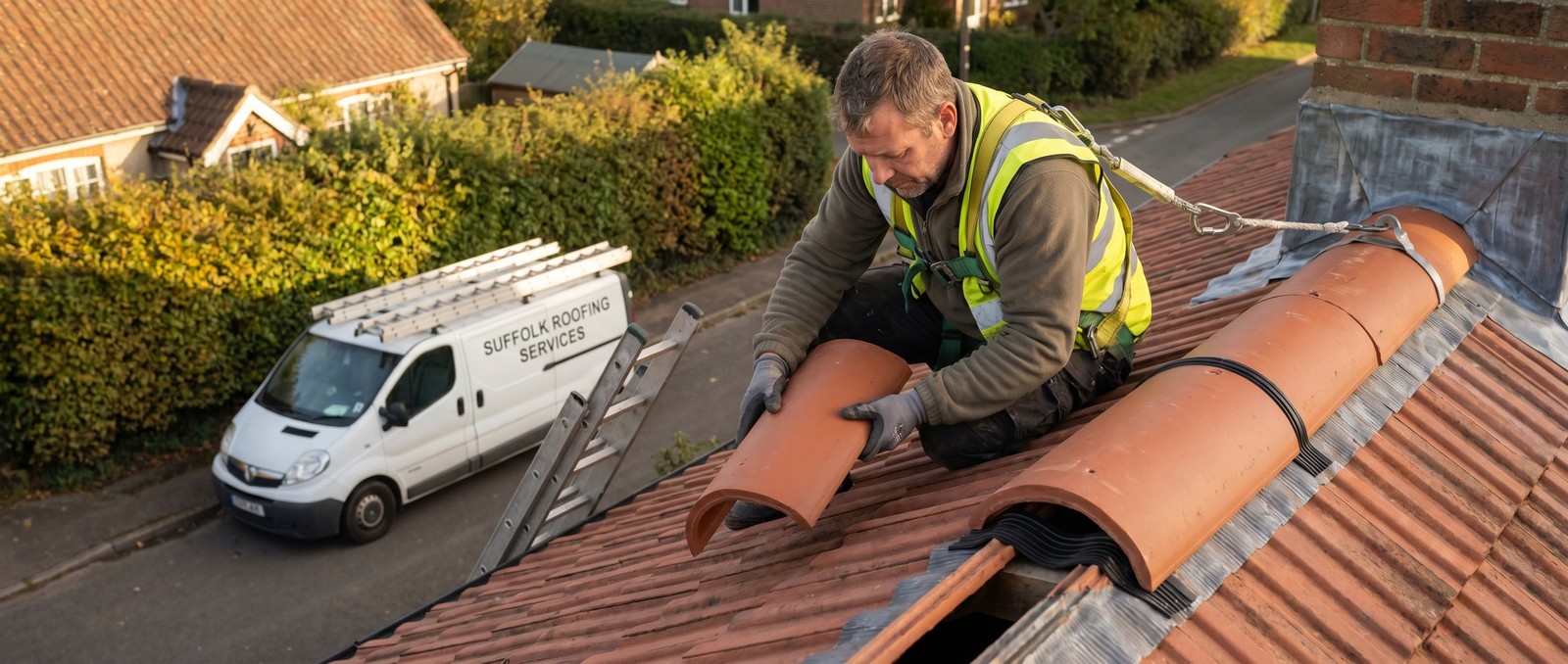
Software for UK roofers
You didn’t become a roofer to argue about deposits.
It rained off three jobs on Tuesday. By Friday you’ve got six angry voicemails, a diary that doesn’t fit on one page, and a homeowner asking why a £15,000 deposit feels like sending fifteen grand to a name on Facebook. The scaffold was meant to be up Monday - it’s Tuesday afternoon and the scaffolder isn’t picking up. You quoted ten roofs in March and won two; the other eight you’ll never hear back from, except as the price the next roofer has to beat. And somewhere between all of that you’ve still got to remember when the NFRC renewal is due.
We make custom software for roofers - sole-trader pitched-roof specialists through to five-van firms running storm work and a recurring commercial maintenance book. Small apps and automations that sit on top of what already works for you - Tradify, ServiceM8, Powered Now, JobLogic, paper-and-WhatsApp, whatever you run - and quietly do the bits that waste your Sunday evening. Not another job app to learn one-handed at the top of a ladder. The bit between quote sent and paid, scaffolded, weather-aware, signed off, booked back in next spring - that’s the bit we take off your plate. Tell us what’s slowing you down and we’ll come back with a sketch.
What you spend your week on that you shouldn’t have to
- Half a Saturday up a ladder measuring up a £18k re-roof that goes to the cheaper bloke off Facebook on Monday morning.
- Quote ghosting - you sent it Tuesday with a schedule of works, heard nothing, and now you’re staring at the inbox on Sunday wondering whether to nudge.
- The £15k deposit conversation homeowners don’t want to have and you can’t avoid - the cheaper bloke wants it in cash and you want it tracked.
- Scaffold-on-Monday that didn’t happen, with no handover certificate from the scaffolder, no seven-day inspection record, and your insurer asking why on the post-job photos.
- A wet week that cascades the diary for the next month - six homeowners ringing about the same rescheduled re-roof, two of them threatening to find someone else.
- Pitched re-roofs slipping over a fortnight because the dry-fix ridge system didn’t arrive at SIG when promised - and the homeowner thinks you’ve forgotten.
- A flat-roof EPDM lap that’s lifted on a four-year-old install - warranty’s still in date if you can find the install photos and the manufacturer’s paperwork.
- An insurance loss-adjuster pack - twelve photos staged across initial damage, temporary repair, defect detail, during and after, plus the scaffold inspection and your contractor PI - currently spread across three phones in two formats.
- Lead flashings on a conservation-area chimney where the homeowner wants Code 5 and the builder cut Code 4 into the price, and the disagreement is happening in your Tuesday-morning voicemail.
- NFRC, CompetentRoofer, RCAT, RoofCERT, CITB H&S, working-at-height risk assessment, LOLER harness inspection, NHBC-warrantied workmanship records - paperwork that lives in seven different inboxes.
- CIS subbie verification on Friday afternoon because the lad’s UTR didn’t quite go through and you can’t pay him until it does.
- Commercial roof inspections - single-ply membranes on a school sports hall, GRP on a small industrial unit - that should be a recurring contract but live as one-off jobs you remember to chase in October.
These aren’t problems for a generic job app. They’re the bit between got the call and paid, paperwork-clean, photo-pack filed, booked back in for next year. That’s the bit we build.
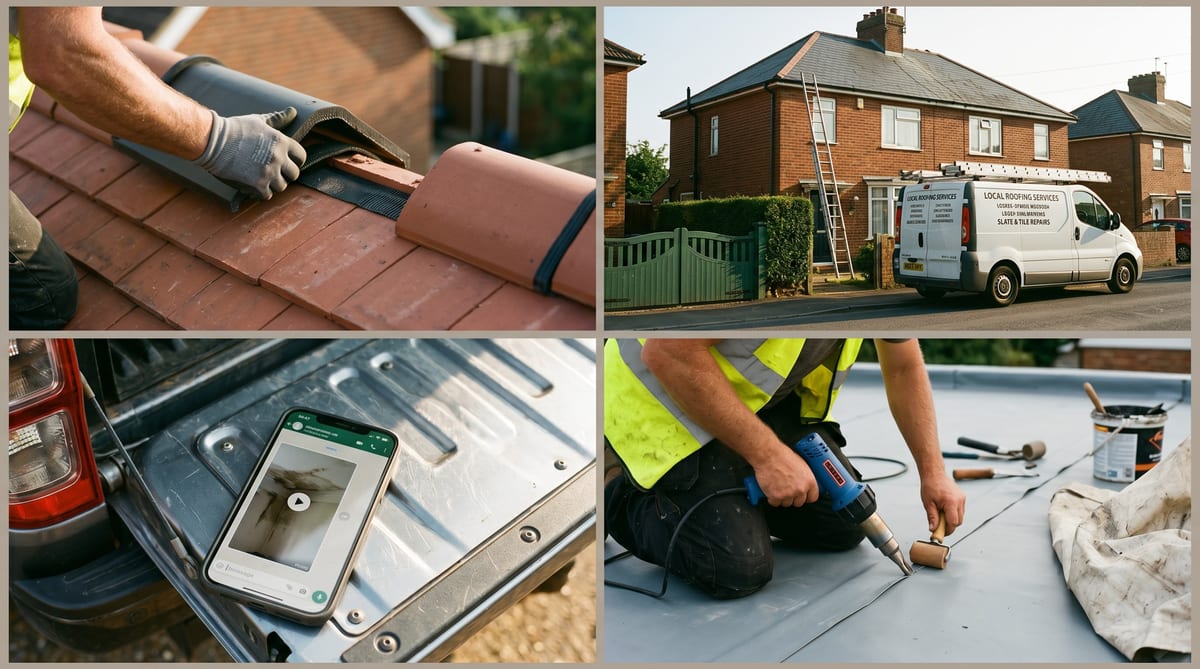
Example problems we could solve
Six things we hear most often from roofers - with what the solved version looks like in your week. Every build is sized to your business: a one-van pitched-roof specialist probably needs the first two; a five-van firm running storm work, a commercial maintenance book and the occasional re-roof might want all six plus the spokes. None of it means binning what already works.
1. The up-a-ladder line that triages emergencies from re-roof quotes
The lost-emergency moment: phone rings four times while you’re at the top of a ladder fitting lead flashings to a chimney. By the time you’re down, the homeowner with water coming through her front-bedroom ceiling has rung the next roofer on Google. Storm-week emergencies go to whoever picks up first; the rest of the week, a can-you-quote-my-re-roof enquiry that waits forty-eight hours is already shopping elsewhere.
Solved looks like: an answer-on-your-behalf line that picks up while you’re on the roof - across calls, SMS, WhatsApp and the chat box on your website - in your voice, trained on your out-of-hours policy and your last-sent quote. Photos and videos on the inbound are first-class: a homeowner sending a “water’s coming through the ceiling” video gets recognised as an emergency and the call comes through to your phone in under sixty seconds with the postcode already captured; a homeowner sending a slipped-tile photo at half-six on a Sunday gets a templated reply, a Monday-morning slot and a quote-survey window. Storm-season elasticity is the roofer-specific thing - after a 70mph gust on a Sunday night the line has to handle twenty calls an hour without you adding staff, and then sit quiet for the next fortnight without staffing changes. The longer version lives at Trainable Inbound AI Agent; the roofer setup is tuned for emergency-leak-vs-re-roof-quote-vs-maintenance triage with photo and video on the inbound.
2. EagleView-driven quote out, nudge ladder behind it, won before the next roofer’s rung back
The Saturday-survey moment: half a Saturday up a ladder measuring up a £18,000 pitched re-roof; quote PDF goes out Sunday evening; by Wednesday lunchtime there’s nothing back; by Friday a different van is on the drive. You did the survey for free.
Solved looks like: the aerial measurement (EagleView, Hover, Roofr, or your own drone) drops into the quote engine; the trade-supplier feed (SIG, JJ Roofing, Marley) prices the line items at your current trade rates; the schedule-of-works PDF assembles from a templated set tuned to the roof type - pitched re-roof with dry-fix ridge, flat-roof EPDM strip-and-overlay, GRP refurb, single-ply membrane - and the one-tap-accept SMS lands in the homeowner’s phone before the next roofer’s even rung her back. The chase ladder runs behind it in your voice, not a sales voice - “are we doing this or shall I park it” on the morning she was actually going to decide, not three weeks too late. The longer version lives at Quote & Chase Ladder; the roofer’s version wires aerial measurement, trade pricing and the schedule-of-works PDF into the same flow, with the scaffold-on-the-calendar trigger queued behind acceptance.
3. Weather-aware rescheduling that doesn’t break the diary
The wet-week moment: “Forecast said dry. It wasn’t. Now the felt’s half off, the homeowner’s ringing the office, and three more jobs are about to get bumped onto Tuesday next week.”
Solved looks like: a thin layer on top of your existing diary that watches the Met Office forecast for every job’s postcode, flags at-risk work forty-eight hours out, and offers the homeowner a one-tap choice - postpone, hold-as-standby, or commit and we’ll tarp at the end of the day. When a slot opens because a job slipped, the system auto-promotes from a waitlist of small jobs (a slipped tile, a gutter clear, a half-day GRP repair) that can fill the gap without a scaffold strike. You stop being the bottleneck between the weather and the diary; the homeowners who’d otherwise be a stack of voicemails get a heads-up before the rain lands. Roofing is the trade where weather is the diary - most generic field-service apps treat it as the thing you reschedule around manually. We treat it as a first-class input.
4. Scaffold-on-Monday, photo-set at sign-off, review chase that runs itself
The scaffold-handover moment: scaffold was meant to be up Monday; Tuesday morning no scaffold, no scaffolder answering; homeowner’s been off work since Friday. By the time you’ve got hold of him you’ve lost the morning and the post-job photo set was never going to be a priority on a job that started late.
Solved looks like: booking → night-before reminder → scaffolder-coordination ping at -3 days with a single-tap yes/no/confirm-alt-day reply → en-route SMS that fires off your calendar flipping to travelling → on-site photo-capture flow shaped by job type (pitched re-roof: condition shots before strip, sarking and rafter shots during, dry-fix ridge close-ups before tile-on; flat-roof: substrate and detail shots before lay, weld-edge close-ups during, drainage and upstand shots after) → seven-day scaffold-inspection ping fires automatically → branded photo-set PDF assembles at scaffold strike → ninety-minute review prompt with one-tap links to Google, Checkatrade and Trustist. Negative sentiment routes back to you privately before it lands public; positive sentiment goes straight out. The same stage-tagged photo set is instantly retrievable if the same roof later supports an insurance claim - the depth on the loss-adjuster pack lives on the storm-damage spoke. The longer version lives at Booking & Review Loop.
5. Deposit, completion balance, retention - three cash cycles on one engine
The cashflow-whiplash moment: £4,500 deposit on the doorstep for a domestic re-roof. £12k completion balance fourteen days after sign-off. Letting-agent batch invoice for a slipped-tile round at month-end on thirty-day terms. Commercial GC retention 5% held at practical completion and released twelve months later in the defects-liability period. Four cash cycles, one Xero, one you - and the homeowner asking on Tuesday morning why she’s getting an invoice email when she paid you a deposit in cash.
Solved looks like: invoices that go out on completion with the customer-type already tagged. Domestic re-roof deposits track against the eventual completion-balance invoice so the homeowner never gets confused. Domestic completion gets a fourteen-day cadence and a card-and-direct-debit link in the first email. Letting-agent batch invoices land on the 1st with the per-property breakdown the agent’s bookkeeper expects, and a day-31 statutory-interest line citing the Late Payment of Commercial Debts (Interest) Act 1998 - politely, automatically, without you having to feel awkward about asking. Commercial GC sub-contracts run CIS reverse-charge worded the way the GC’s QS recognises, with retention deducted at practical completion and the second-half release tracked through to the twelve-month defects-period end. Insurance work - where the loss adjuster sits between you and the insurer’s BACS - runs on its own pipeline, with the depth on the storm-damage spoke. The longer version lives at Invoice & Dunning Ladder; the roofer version’s distinct features are the deposit-tracked-against-completion-balance domestic flow and the GC-retention twelve-month release ledger.
6. The maintenance round that turns one re-roof into a ten-year customer
The forgotten-call-back moment: you laid a flat-roof GRP for a homeowner in 2022 with a twenty-year manufacturer guarantee conditional on a five-yearly inspection; you laid a single-ply membrane on a small industrial unit for a property manager in 2023 with an annual inspection contracted in; on paper £15-£25k a year of recurring inspection-and-minor-remedial revenue across the book, in practice the diary fills itself with the next storm and the recurring round is a Friday-afternoon spreadsheet that doesn’t get done.
Solved looks like: every install becomes a recurring service object on completion - pitched re-roof: annual or biennial gutter-clear and ridge-cap visual; flat-roof EPDM / GRP / single-ply: manufacturer-condition inspection cadence (typically annual on commercial, five-yearly on domestic), photo-evidenced against the original install record. Eleven months before each due date the round auto-builds, the diary slots get suggested, the homeowner or property manager gets a heads-up SMS in your voice, and your engineer leaves the office in November with a tablet that knows what they’re looking for on every roof. Defects flow back to the same record so the warranty-claim-three-years-later doesn’t start from a paper file in the van. The longer version lives at Recurring Service Recall; the commercial-flat-roof PPM depth lives on the commercial-maintenance spoke.
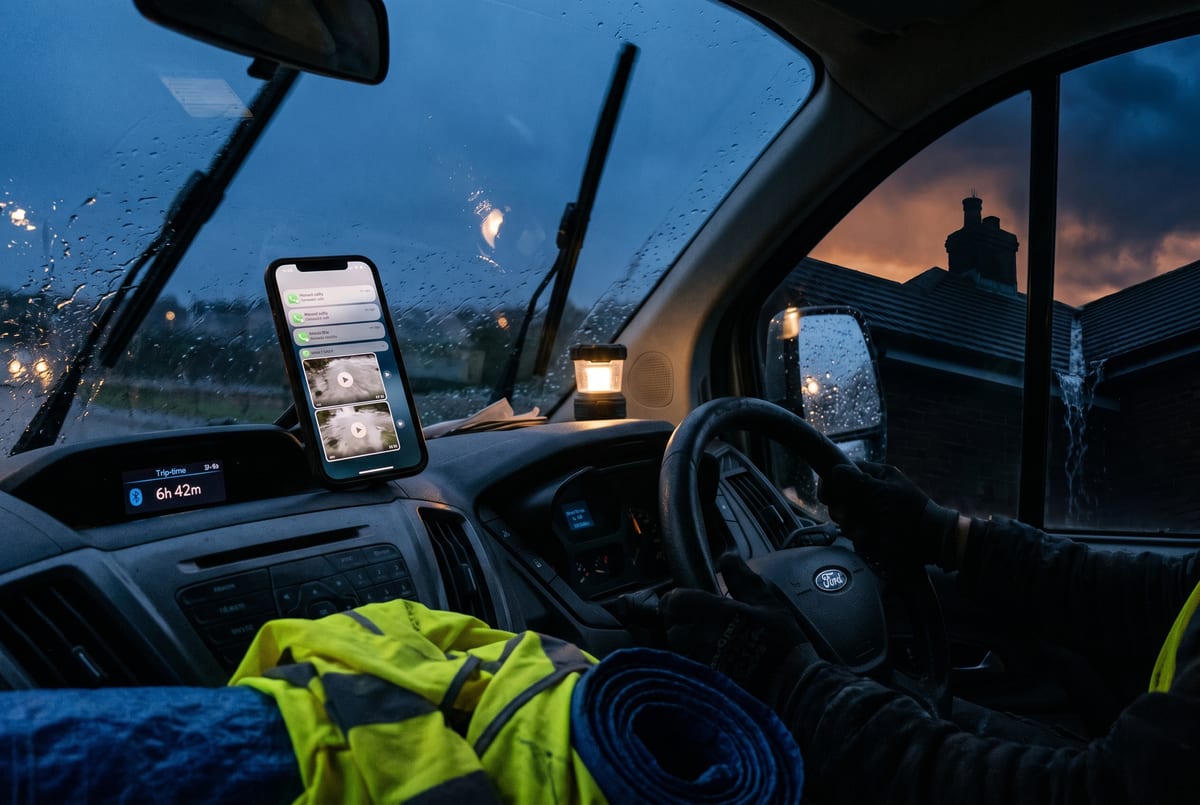
The closest things we’ve already built
- Allways Roofing Haverhilldomestic pitched-roof contractor in Haverhill, Suffolk. We built and run the site, with service pages covering re-roof, flat-roof, repair and gutter work and a CB9 catchment of location pages around Haverhill, Sudbury, Saffron Walden and Bury St Edmunds. The closest live reference for a roofer who wants the website and the back-office wiring done by the same studio. (Named pull-quote and final outcome figures hold until the permission checklist clears - full case study at Allways Roofing.)
- HC Electricala different reactive trade in the same Suffolk catchment. Different regulator stack, same trade-chassis: the fast public site, the quote-and-chase engine behind it, the recurring-recall annuity, the letting-agent batch billing, the audit-trailed evidence record. The closest cross-trade reference for how the chassis runs in a Suffolk reactive-trade business. See Hc Electrical.
- mendbuddyour own multi-channel AI agent for inbound conversations across SMS, WhatsApp, web chat, Facebook Messenger, Instagram and inbound + outbound voice. The up-a-ladder line in problem 1 and the storm-night surge handling are roofer-shaped versions of this. See Mendbuddy.
If your week’s narrower than the whole of the above
Two sub-audiences whose week looks different enough that they have their own pages:
- Storm-damage / insurance specialist →if half your work comes through loss adjusters and the sixty-to-ninety-day wait for payment is the bigger problem than winning the job. The photo-evidence pack, the claim-status board, the off-season referrer cadence, and the cashflow ledger built around insurer pay cycles.
- Commercial flat-roof + recurring maintenance →if your customers are facilities managers and property estates rather than homeowners, and annual PPM contracts on EPDM, GRP and single-ply membrane roofs are where your margin lives. The inspection-round ledger, the per-property-manager portal, the manufacturer-warranty tracker, and the framework-contract billing layer.
Adjacent trades and verticals
- Electriciansthe trade-chassis reference; HC Electrical is the named-build proof of how this shape runs in a Suffolk trade business.
- Plumberssame lettings-agent monthly cash cycle, same domestic-emergency vs commercial-thirty-day whiplash, different physical pain.
- Gas Safe engineersthe CP12 annual round and the flat-roof inspection round share the forgot-until-the-renewal-email shape, just at different cadences.
- MCS-registered solar / battery installerssolar PV mounting overlaps the pitched-roof layer; if MCS is the bulk of your work the MCS hub is the better fit.
- Lettings agents and landlord portfoliosthe agent side of every slipped-tile and flat-roof-leak conversation that comes to you via Fixflo or Propertyfile.
FAQ
Do I have to bin Tradify / ServiceM8 / Powered Now / JobLogic?
No. We sit on top of what’s already working and replace the bit that doesn’t - usually the quote-nudge, the scaffolder-coordination ping, the insurance pack assembly, or the commercial maintenance round. If your job entry and diary are fine in Tradify, we hook into the export and build outward from there.
Will you submit my NFRC / CompetentRoofer / RCAT / RoofCERT notifications for me?
No. The scheme portals don’t publish stable APIs and the indemnity stays with you as the registered contractor. We build the reminder cadence, the audit log, and (where the portal allows) a pre-filled PDF you paste in. You still log in, sign, and submit - same posture as we take on Gas Safe scheme notifications and NICEIC EICR submissions.
Do you do drone work or aerial measurement?
We don’t fly drones. We build the bridge: if you’re flying yourself or ordering EagleView, Hover or Roofr reports, we parse the measurements into your quote line items and price them against your trade-supplier feed. You stay the operator; we stay the software.
Can the system handle my NHBC-warrantied workmanship records for new-build sub-contract work?
Yes. The audit-log shape is the same as the EICR / CP12 evidence record - install date, materials batch references, the workmanship photo-set, the warranty start and end dates. When the main contractor or the NHBC inspector asks for the record three years later, it comes out of one click rather than a paper file in the van.
What does it cost?
Every build is scoped per business - depends on what you’ve got already, what’s getting replaced, and what’s getting added. We talk it through, agree scope and price in writing, then build. Send an enquiry and we’ll come back with a sketch. See pricing for how we work.
How long until something’s live?
Most roofer builds we’ve sketched go from scope conversation to a working version you can run a real re-roof through in a few weeks, then a couple more weeks of running live work through it before go-live. Storm-damage and commercial-maintenance scopes usually run a little longer because the loss-adjuster or property-manager portal adds a second user audience that needs to be tuned to their preferred reporting format.
Can you handle CIS reverse-charge for commercial sub-contract work?
Yes. CIS is the bit that breaks generic Zapier flows; we build it properly into the invoice path with subbie UTR verification and CIS300 monthly drafts. Same shape as the commercial-electrician and commercial-plumber builds.
I’m a one-van pitched-roof specialist - is this overkill?
The whole point of bespoke is that it’s the size of your business. A one-van setup might just be problem 1 (the up-a-ladder line) and problem 2 (the EagleView-driven quote ladder). A five-van firm running storm work, domestic re-roofs and a commercial maintenance book might be all six plus both spokes. We scope to what’s actually hurting.

Tell us what your week looks like
Send an enquiry - what’s your van count, what mix (domestic re-roofs, flat-roof EPDM / GRP / single-ply, storm and insurance, commercial PPM), what scheme membership you carry (NFRC, CompetentRoofer, RCAT, RoofCERT, NHBC), what’s already on your phone, where the Sunday-evening admin sits. We’ll come back with a sketch of what we’d build and what it would cost. No calendar, no demo to sit through. Email reply, scoped sketch, you decide.