


Software for UK builders
You didn’t get into the trade to write CIS300 returns on a Sunday evening.
It’s the 17th of the month. You’re at the kitchen table with three subbie UTRs scribbled on the back of a Travis Perkins receipt, the Wife not impressed. Eque2 wants £200/mo to run your CIS and you’re a one-man firm with two lads on the books. The extension at the customer’s house in Sudbury is into the second-fix and she thinks the deposit was the deposit - the strip-out invoice, the first-fix invoice and the second-fix invoice have all landed as a shock. The plasterer didn’t show on Tuesday so the sparky can’t second-fix on Wednesday and the kitchen-fitter loses Thursday - the week’s already a smouldering wreck. Travis Perkins are holding a £4k plasterboard order because you’ve hit your credit limit. Howdens swapped a hob brand on the Friday delivery without telling you and the customer’s livid.
We make custom software for builders - sole-trader-with-a-lad through five-van design-and-build SMEs. Small apps and automations that sit on top of what already works for you - Tradify, Powered Now, Buildertrend, Joblogic, Eque2, Sage Construction, HBXL Estimator, paper-and-WhatsApp, whatever you run - and quietly do the bits that waste your Sunday evening. Not Buildertrend (built for Texas remodellers); not Eque2 (priced for a finance director). The bit between quote signed and paid, snagged, signed-off, retention released, lads paid, CIS300 filed - three different jobs no single SME app does well - that’s the bit we take off your plate. Trade-chassis-wise, same shape we run for sparkies and roofers; tuned for the builder’s three distinct moments - CIS, stage payments, supplier credit accounts.
What you spend your week on that you shouldn’t have to
- The CIS300 monthly return on the 17th - three subbie UTRs on a Travis Perkins receipt, the £100 fine if you forget, the snotty HMRC letter if you slip twice.
- Subbie verification on the Monday morning when a new lad turns up with a UTR that doesn’t verify on the Gateway - pay him gross? deduct 30%? he’s already in the van.
- A £40,000 extension quote that took half a Sunday and twelve pages - three weeks later, silence; the other quotes were £8k cheaper because they hadn’t priced the steels.
- Stage payments the customer didn’t understand - deposit, strip-out, first-fix, second-fix, completion - and the awkward conversation at plastering because she thought the deposit was everything.
- Travis Perkins / Selco / Howdens / Jewson monthly statements six pages long, with credits for returned timber you can’t trace and a Howdens substitution you didn’t authorise.
- Plasterer no-show on Tuesday cascading the sparky, the kitchen-fitter and the tiler across the rest of the week.
- RAMS / method statement for the commercial strip-out - last one was three years ago in Word and you’ve lost the file; the architect’s contract administrator wants it before Tuesday’s site visit.
- Reverse-charge VAT on commercial sub-contracting that you and your customer’s bookkeeper disagree about every invoice.
- Cashflow vs Friday wages - lads want paying Friday, customer pays in 30 days, Travis Perkins wants paying in 30 days, the bank’s already nervous.
- An F10 notification you weren’t sure you needed on a job that crept past thirty working days - and the realisation halfway through that the project’s now CDM-15 principal-contractor-shaped whether you registered it that way or not.
- Snagging on handover Friday - three pages of items the customer’s noted, half of them not yours (kitchen-fitter’s silicone, painter’s runs, sparky’s faceplate alignment), all on your reputation.
These aren’t problems for a generic field-service app. They’re the bit between got the contract signed and retention released twelve months after handover. That’s the bit we build.
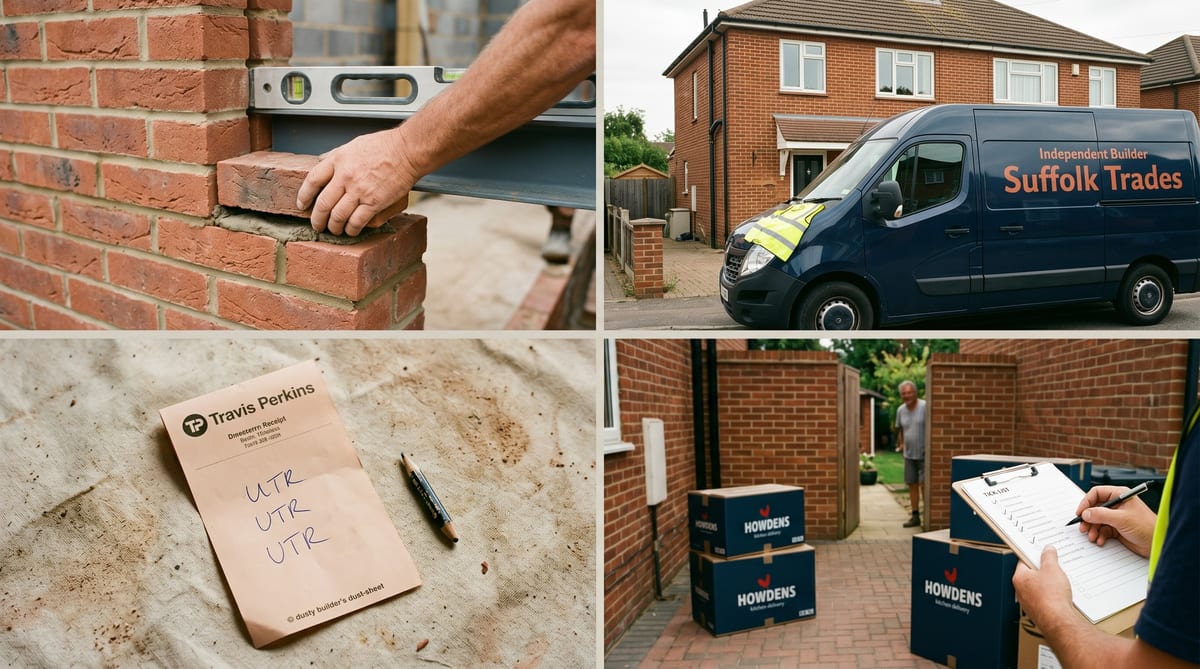
Example problems we could solve
Six things we hear most often from builders - with what the solved version looks like in your week. Every build is sized to your firm: a sole-trader-with-a-lad doing extensions probably needs the first two and the fifth; a five-van firm running commercial fit-outs alongside domestic refurbs might want all six plus both spokes. None of it means binning what already works.
1. The on-the-bricks line that triages an extension enquiry from a panic call
The lost-extension-enquiry moment: a fifty-word web enquiry comes in for a single-storey rear extension while you’re on the bricks; by the time you’re down she’s already messaged three other builders off MyBuilder. Or - phone rings four times while you’re cutting a stair-stringer in the loft conversion; the caller is a homeowner whose flat roof has gone in overnight and she’s rung the next builder on Google by the time you’re down the loft hatch. Most missed calls in this trade are either £40k+ quote enquiries that go cold in forty-eight hours or genuine emergencies that go to whoever picks up first.
Solved looks like: an answer-on-your-behalf line that picks up while you’re on the tools - across calls, SMS, WhatsApp, Facebook DM and the chat box on your website - in your voice, trained on your geographic patch and your last-sent quotes. The builder-specific thing is the budget-band qualifier at the front: the agent asks scope (extension vs loft vs garage conversion vs kitchen refurb vs small commercial), planning status (consented / in-application / pre-planning), and a budget band before you’ve driven forty minutes to a survey for a cash-job loft conversion at half the price. Photos and videos are first-class - a homeowner sending three shots of the kitchen she wants extending into gets a sensible same-channel reply and a survey window in the diary that night. The longer version lives at Trainable Inbound AI Agent; the builder setup is shaped to triage extension-vs-loft-vs-refurb-vs-small-commercial with a budget-band qualifier, and to pre-load a survey brief into the iPad before you’ve left the bricks.
2. The £40k extension quote, photographed, structured, nudged
The Sunday-evening moment: half a Sunday spent writing a twelve-page extension quote with the structural notes, the schedule of works, the provisional sums for the kitchen and the steels; three weeks later - silence; the other quotes were one page on a Tradify template and £8,000 under because they hadn’t priced the steel beams or the structural engineer or the Part L overheating calc.
Solved looks like: the photo set the customer sent on enquiry (plus the ones you took on the half-Saturday survey) drives a structured quote - a scope-of-works PDF assembled from a builder-shaped template library (single-storey rear, side return, wrap-around, loft conversion, garage conversion, kitchen-bathroom refurb), with the steels priced from the structural engineer’s calcs against your trade-merchant feed (Travis Perkins, Selco, MKM, Buildbase), provisional sums for the kitchen and the bathroom flagged where the customer hasn’t chosen yet, and the agreed-measure / agreed-fixed-price line in the right place for the contract terms you tend to write. A one-tap-accept SMS lands with the customer, with a stage-payment ladder queued behind acceptance. The chase ladder runs in your voice - “are we doing this or shall I park it” on the morning she was actually going to decide, not three weeks too late - and the £40k+ extension is the most ghosted ticket in the trade, so a +90-day reactivation nudge runs quietly for the cheaper-bloke-disappeared moment in March. The longer version lives at Quote & Chase Ladder; the builder version’s distinct features are the scope-of-works PDF tuned for the £25k-£80k+ domestic ticket and the steel-pricing bridge from the structural engineer’s drawing pack into the quote line items. Depth on the £25k-£60k domestic extension shape lives on the extension-specialist spoke.
3. Multi-trade scheduling that catches the plasterer’s no-show before Thursday slides
The Tuesday-morning moment: “Plasterer didn’t turn up Tuesday. Sparky can’t second-fix Wednesday. Kitchen-fitter loses Thursday. I’m PMing five trades from one WhatsApp group and three of them are on Read but not replying.”
Solved looks like: the project schedule as a multi-trade Gantt the foreman opens on his phone - sparky, plumber, plasterer, tiler, kitchen-fitter, glazier, roofer (where the extension touches the existing roof), steels-fabricator, structural engineer for sign-off visits, supplier delivery dates locked in alongside. Each trade slot carries the dependencies (plastering can’t start until first-fix is signed off; kitchen install can’t start until the floor’s screeded and dried out). When one trade slips, the cascade re-times the dependents and fires a WhatsApp ping to the affected trades - “plasterer pushed to Thursday, your second-fix moves to Friday at 09:00, confirm yes or call” - and the customer’s portal updates automatically so the “will it be done by Christmas” phone-call doesn’t happen every other morning. Daysheets land via WhatsApp at the end of each shift; the cashflow forecast updates against the new stage-trigger dates. Builders aren’t bricklayers - you’re project managers - and the multi-trade slip is the single biggest lever between profit and loss on every extension. The build is shaped around catching the slip in hours, not days. The longer version lives at Booking & Review Loop; the depth on the extension cadence lives on the extension-specialist spoke.
4. Stage-payment ladder, dunning, retention release - three cash cycles on one engine
The whiplash moment: £8k deposit on a £40k extension Monday morning. £14k first-fix invoice three weeks later that the customer queries because she thought the deposit was the deposit. £6,500 commercial-sub invoice on a Mayfair restaurant fit-out at 30-day terms with 5% retention deducted. A £4,200 retention release on the office fit-out you finished last October, due next November in the defects-liability period. Four cash cycles, one Xero, one you - and the customer asking on Wednesday morning why she’s getting a strip-out invoice when she paid you a deposit a fortnight ago.
Solved looks like: invoices that go out on stage completion with the customer-type already tagged. Domestic stage-payment invoices land SMS-first (never email-only - emails go to spam) with the photo evidence per trigger, a “what’s been done” paragraph in plain English, the schedule of what’s next, and a one-tap card or open-banking link. Commercial sub-contract interim valuations land on the contract’s monthly or staged cycle with reverse-charge VAT correctly applied at the line level, retention deducted, and the day-31 statutory-interest line citing the Late Payment of Commercial Debts (Interest) Act 1998 where it’s earned. Retention release runs as a tracked object across the 12-month defects-liability period - half at practical completion, the second half on the anniversary, with a friendly chase to the customer’s QS thirty days before each release date and the snag-list sign-off + as-built drawings + H&S file extracts attached so the conversation is short. The full stage-payment ladder lives at Stage Payment & Retention Ledger; the dunning side lives at Invoice & Dunning Ladder; the depth on the commercial side lives on the commercial-fit-out spoke.
5. CIS subbie verification, monthly CIS300 draft, reverse-charge VAT done right
The 17th-of-the-month moment: “19th of the month and three UTRs on a Travis Perkins receipt. Eque2 wants £200/mo and a finance director to operate it; Sage Construction the same. Excel’s no good when HMRC fines you £100 for a slip - twice in a year and the letter gets snotty.”
Solved looks like: the CIS spine as a builder-shaped engine. New subbie added → HMRC CIS verification queue with the UTR + NI; the engine pre-fills the Gateway form, you confirm and submit; deduction rate (gross, 20%, 30%) stored against the subbie record with the verification reference and the date. Daysheets land via WhatsApp through the week (“Mark, 7-3, kitchen extension”); on the 5th of each month, the CIS300 monthly return assembles automatically from the subbie ledger with the CIS deduction calculated per line, ready for you to review and submit before the 19th. Subbie payslips PDF for the lad, bank-payments CSV for your bank, Xero handoff to keep the books right. Reverse-charge VAT on commercial sub-contracting renders correctly at the line level - labour-and-services lines reverse-charge, materials-supplied lines don’t - with the statutory wording HMRC and your main contractor’s bookkeeper both recognise. CIS is the defining paperwork pain in the trade and the engine is what closes the £100-fine risk and frees the Sunday afternoon. The full CIS engine lives at Multi Channel VAT & CIS Invoicing.
6. Travis Perkins / Selco / Howdens supplier statement reconciliation
The six-page-PDF moment: “Statement from Travis Perkins is six pages. Half of it’s the kitchen extension at Sudbury, half’s the loft conversion at Bury, there’s a credit on returned timber I can’t trace, and Howdens swapped the Bosch hob for a Beko on Friday’s delivery without telling me.”
Solved looks like: the supplier statement as a tracked reconciliation. The monthly statement PDF lands in a dedicated inbox; a parser splits the lines by project / job code (your Travis Perkins / Selco / Howdens / Jewson / MKM / Buildbase account references map to your jobs in the system); each line tags to the right Xero bill draft and the right project’s cost ledger so the “why doesn’t this extension’s margin add up” answer is one click instead of a Sunday afternoon. Substitutions vs the original quote line items flag automatically - Howdens swapped a Bosch for a Beko, the engine flags it, you decide whether to query or accept before the customer notices. Credits for returned materials reconcile to the original PO. Credit-limit notifications from the supplier trigger a cashflow alert before they hold an order in the yard with the lads waiting. The builder-specific thing is that monthly statements are the largest unreconciled cost flow in a builder’s books and the cost-leakage usually lives somewhere in a six-page Travis Perkins PDF nobody fully reads. The longer version lives at Job Cost & Margin Dashboard.

The closest things we’ve already built
- HC Electricala domestic and EICR electrician in Haverhill, Suffolk. Different trade, same Suffolk trade-chassis with the CIS-aware commercial-sub flow on the electrical side. The closest live reference for how the same CIS + reverse-charge VAT + recurring-recall pattern runs in a Suffolk trade business - and the trade-chassis a builder version sits on. (Named pull-quote and final outcome figures hold until the permission checklist clears - full case study at Hc Electrical.)
- Allways Roofing Haverhilladjacent trade in the same Suffolk catchment. Roofer + scaffolder + insurance pipeline coordination, the customer-comms cadence on a long project, the photo-evidence-per-stage discipline that ports straight across to the builder’s stage-payment ladder. (Named pull-quote and final outcome figures hold until the permission checklist clears - see Allways Roofing.)
- mendbuddyour own multi-channel AI agent for inbound conversations across voice, SMS, WhatsApp, Facebook DM, Instagram and web chat. The on-the-bricks line in problem 1 and the customer-comms during a long extension in problem 3 are builder-shaped versions of this. Trained on your scope bands, your supplier list, your stage-payment language, and your customer voice. See Mendbuddy.
- MMI servicesa legacy insurance-claims surface (Plesk PHP, being modernised) we took over and are quietly modernising. The proof we can take over and modernise older internal systems - useful for builders running an older Sage Construction or HBXL Estimator alongside the new flows, where the right answer is port the bits that hurt without binning the bits that work.
If your week’s narrower than the whole of the above
The week looks different enough for two sub-audiences that they have their own pages:
- Extension / loft / garage conversion specialist →if your week is mostly £25k-£60k+ domestic extensions, loft conversions, garage conversions and kitchen-bathroom refurbs, the stage-payment ladder + multi-trade Gantt + Building Regs Part L / Part F / Part O sign-off cadence + customer-side project portal is the build. Saturday-survey shape, fortnight-cadence, supplier-lead-time-aware.
- Commercial fit-out / shopfit specialist →if your week is mostly small commercial fit-outs (offices, shops, restaurants, clinics, light-industrial conversions), CDM 2015 principal-contractor duty + F10 + RAMS + retention at PC + reverse-charge VAT + 30-60 day terms is the spine. JCT / NEC contract-shaped, agreed-measure interim valuations, retention-released-at-PC and the second-half twelve months on.
Adjacent trades and verticals
- Electriciansthe trade-chassis reference; HC Electrical is the named-build proof of how this shape runs in a Suffolk trade business. Same CIS + reverse-charge VAT discipline on the commercial side.
- Plumbersthe second-fix trade you’re scheduling alongside; the commercial plumber spoke covers the CIS-reverse-charge side from the plumber’s perspective.
- Gas Safe engineersthe boiler-installer / heat-pump-installer you’re scheduling on extension and refurb work; the boiler-installer spoke covers the install-paperwork side that lands at handover.
- Roofersthe roof side of any extension that touches the existing roof; sibling trade in the same Suffolk catchment.
- Constructionfor bigger commercial / civils work above the SME fit-out scale.
- Lettings agents and landlord portfoliosthe agent side of every property-maintenance-builder conversation; if you do reactive work for two or three letting agents alongside your project work, the agent-side hub is worth a read.
FAQ
Will this replace Buildertrend / Powered Now / Tradify / BigChange / Joblogic / Eque2 / Sage Construction / HBXL?
Usually no, where they’re working. We sit on top of what’s running and replace the bits that hurt - usually the CIS300 + subbie verification, the stage-payment ladder, the supplier-statement reconciliation, the multi-trade Gantt cascade. If your job entry and diary are fine in Tradify, we hook into the export and start from there. Eque2 and Sage Construction do CIS well but the £200-£400/mo cost and the finance-director operating overhead are the wrong size for a one-van builder with two lads on the books.
Will you submit the CIS300 monthly return on my behalf?
No. The CIS300 carries an HMRC obligation that stays with the contractor. We build the verification queue, the deduction calculation, the monthly draft and the audit log - you review and submit on the 19th. The £3 + VAT Gateway fee is yours; the draft assembly is ours. Same posture we take on Gas Safe scheme notifications and NICEIC EICR submissions on the other trade hubs.
Can you handle Building Regs / Part L / Part F / Part O / planning paperwork for me?
No - those notifications and sign-offs carry responsibilities that stay with the builder (and the structural engineer / heating engineer / sparky on their respective competent-person schemes). What we build is the compliance checklist baked into the project from day one - Part A (structural), Part B (fire), Part L (energy efficiency), Part F (ventilation), Part O (overheating in new dwellings and extensions), Part P (notifiable electrical), Party Wall Act notices, FENSA / CERTASS - so the LABC inspector visit isn’t a Friday-afternoon scramble. Depth on the domestic side lives on the extension-specialist spoke.
Will the multi-trade Gantt force my sparky / plumber / plasterer / kitchen-fitter to use new software?
No. The trades get WhatsApp pings in their existing chat surface; the Gantt is the foreman’s tool, not the trades’. The trades confirm or push back via WhatsApp; the cascade runs server-side; daysheets land via WhatsApp. We’ve yet to meet a sparky who wants a new app on their phone.
What about CDM 2015 on bigger jobs?
CDM duty-holder roles (principal designer, principal contractor) stay with the construction client and the appointed parties - they’re professional appointments, not a software function. What we build is the evidence record, the construction phase plan template, the RAMS templates per trade, the F10 notification reminder where applicable (the >30-working-day / >20-worker / >500-person-day thresholds), and the H&S file assembly at handover. The commercial fit-out spoke carries this at depth.
Will the supplier-statement parser actually handle Travis Perkins / Selco / Howdens / Jewson / MKM / Buildbase formats?
Yes - those are the formats we’ve already tuned against. New supplier or a format change, we extend the parser inside a week. We don’t try to be a generic-PDF parser; we tune to the formats you actually receive.
Can you handle FMB / CHAS / NHBC accreditation paperwork?
The renewals and the audit-pack assembly, yes - same audit-log discipline as the EICR / CP12 evidence record on the other trade hubs. The accreditation itself stays with the registered firm. FMB membership-renewal reminder, CHAS pre-qualification questionnaire assembly, NHBC inspection-record audit log at handover.
What does it cost?
Every build is scoped per firm - depends on van count, subbie count, whether the CIS engine is in scope, whether the supplier-statement reconciliation is in scope, and what’s already on your phone. We talk it through, agree price in writing. See pricing.
How long until something’s live?
Most builder builds we’ve sketched go from scope conversation to a working version you can run a real CIS month + a real stage-invoice through in a few weeks, then a couple more weeks of running live work through it before go-live. The CIS engine and the stage-payment ladder usually ship together because the cashflow case stacks; the supplier-statement reconciliation comes in a phase later because the parser tunes against your actual statement formats.

Tell us what your week looks like
Send an enquiry - what’s your van count, how many subbies are on the books, what your extension-vs-commercial mix looks like, what FMB / CHAS / NHBC accreditation you carry, what’s already on your phone for CIS and stage payments, where the Sunday-evening admin sits. We’ll come back with a sketch of what we’d build and what it would cost. No calendar, no demo to sit through. Email reply, scoped sketch, you decide.